
f/8 and Be There
When photographing certain subjects, a narrow depth of field of focus is preferable. For example, if I wish to isolate the subject by placing it in sharp focus against a blurred background, I typically select a very wide aperture such as f/2.8 or f/4. Other subjects call for a very wide depth of field of focus. For example, when taking a picture of a landscape where I wish to have both the foreground and background elements in sharp focus, I select a very narrow aperture such as f/16 or f/22.
However, I photograph many subjects where the depth of field decision is not as critical. In these situations, I'm not attempting to isolate anything by using a narrow depth of field. And, I'm not faced with a subject that demands an extraordinary depth of field. For these subjects, I almost always set the aperture to f/8. Most lenses are sharpest when stopped down somewhat from their widest settings. And, f/8 yields the sharpest possible images for me when depth of field is not an overriding concern.
Here are some example of images where I selected an f/8 aperture:
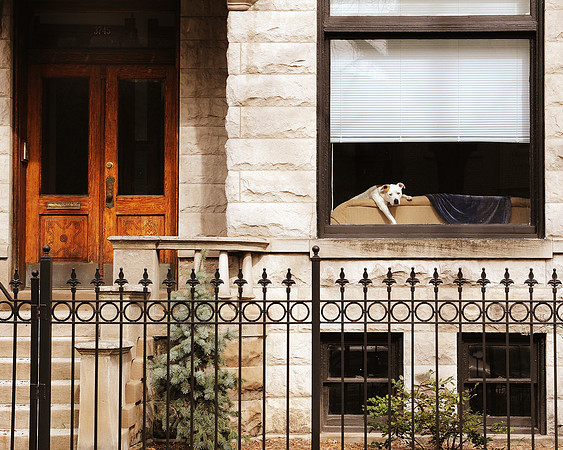
1: "Bungalow Puppy" - this scene is relatively flat and does not require an extraordinary depth of field to keep everything sharp from front to back.
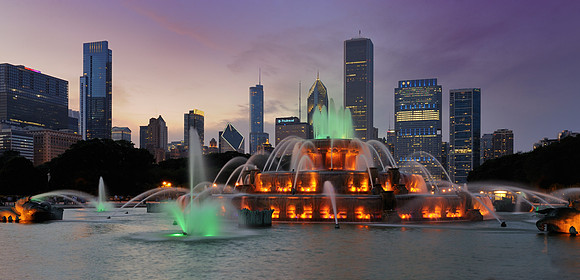
 2: "Buckingham Fountain" - in this scene, the water fountains are far enough away that f/8 will carry the field of focus from the fountains to the skyline without any trouble.
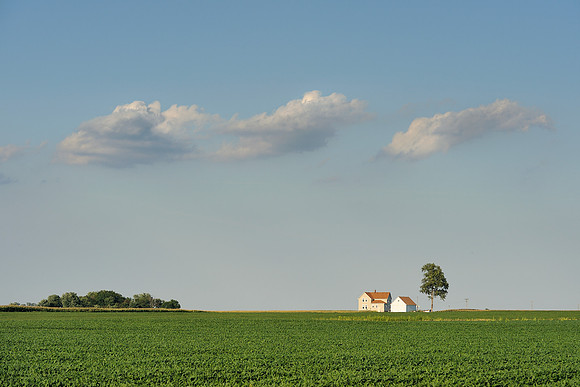
 3: "Illinois Farmhouse" - this scene does not contain any foreground elements that require a narrower aperture than f/8.
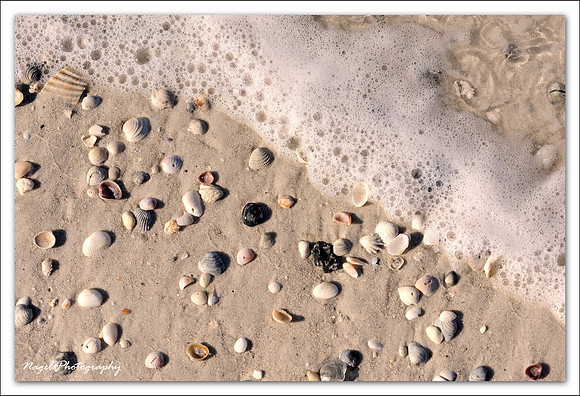
 4: "Sandy Shells" - once again, the elements within the scene are positioned relatively close to each other, so f/8 is appropriate.
Sometimes, selecting a f/8 aperture will result in a slow shutter speed for proper exposure. I use a tripod to enable the use of very slow shutter speeds to remove any concern about camera movement.