
Going Fishing

Just over a year ago, I purchased the Sigma 15mm fisheye lens. Fisheye lenses have limited application. But, when a scene calls for a fisheye, there's no other lens that will do the job.
I've found the fisheye to be particularly useful when photographing architecture. The lens yields a 180 degree angle of view. That's significantly wider than the 114 degree angle of view offered by my Nikon 14-24 lens at its widest focal length.
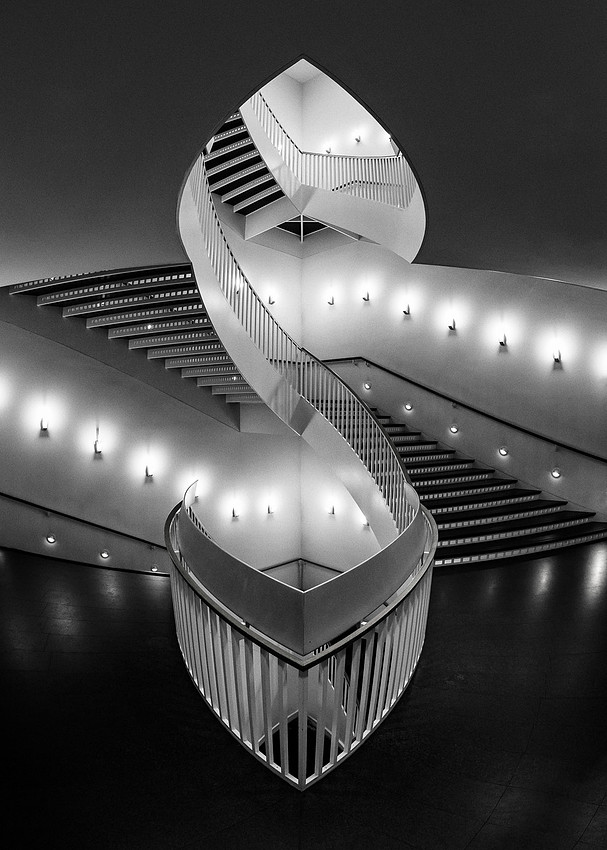
This ultra-wide field of view enables me to capture more of the interiors that I visit. Often times, no other lens will capture the entire inner dome of a State Capitol building. As an added bonus, the fisheye lens is most suitable when photographing subjects that are round or feature curves.
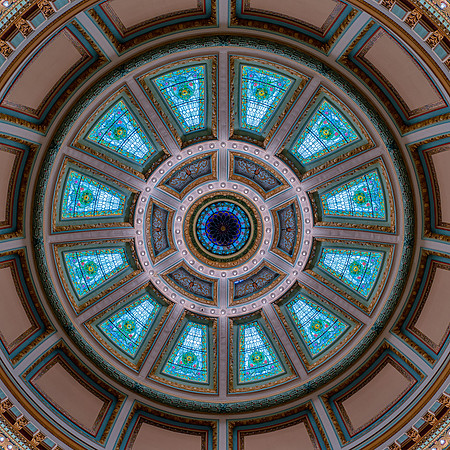
 Inner domeInner dome from the rotunda floor of the Alabama State Capitol building in Montgomery, Alabama on December 3, 2014
I found that I needed my fisheye to capture the entire stadium from this vantage point:
 Wrigley FieldCelebrating 100 years at Wrigley Field on the corner of Clark and Addison Streets in Chicago, Illinois on September 8, 2014
Sometimes, I like to use the fisheye to introduce curvature to make the scene look more wacky or otherworldly:
 Crazy ChristmasHoliday decorations at 15441 Sunset Ridge Drive in Orland Park, Illinois on December 14, 2013. This photograph consists of five exposures blended together to create a high dynamic range (HDR) image.
 Neon ForestMirror Maze of the "Numbers in Nature" exhibit in the Museum of Science and Industry at 5700 S Lake Shore Drive in Chicago, Illinois on November 12, 2014
After shooting with the fisheye lens for more than a year now, it's become an important tool for me that is always in my camera bag. The lens is compact and very light. It's amazingly sharp. And, it rarely has any issues with flare--even when shooting directly into the light.
I house many of my latest fisheye photographs in a separate collection within this website. CLICK HERE to view more of my fisheye pictures.
Comments
I thought you always buy Nikon gear only :)