|
I'll be posting some random thoughts here about my photography: my travel plans, technical information behind some images, stories about how certain pictures were captured, etc. The timing of the postings will also be random as my priority is capturing new images rather than writing about existing ones. I hope you will feel free to comment on any of my postings and I appreciate you taking time to read my entries.

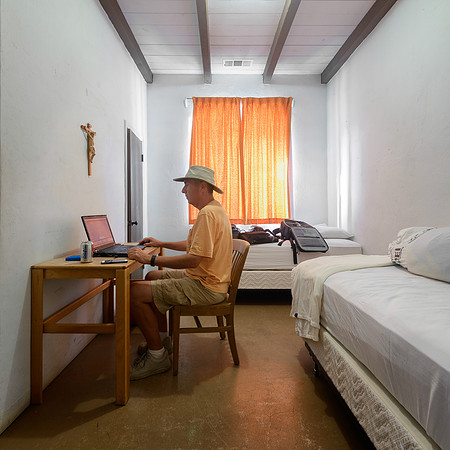
Capitols Under ConstructionDuring my road trip from Chicago to California and back, I hoped to revisit a couple of state capitols. It had been a while since I visited the Wyoming State Capitol. Wyoming was one of the first capitols of my quest to photograph them all. So, I wanted to improve upon that earlier effort. Before arriving in Cheyenne, I learned that the Wyoming State Capitol is closed. It's closed until 2019. When they close these buildings, they close them for a long time! Denver was on my route, so I revisited the Colorado State Capitol. I visited this building two years earlier in 2014. At that time, the chambers (both House and Senate) were closed for renovation. I planned to capture images of those two rooms. To my surprise, the chambers are still closed for renovation! So, I took the opportunity to photograph some familiar scenes in new ways. Minnesota is another state capitol that I must revisit. It was the first capitol that I happened to photograph. At the time, I had no idea that I would undertake a project to photograph all 50 state capitols. So, I only have one exterior picture of the Minnesota State Capitol. I attempted to revisit this building in 2015, but this capitol is also under construction. Fortunately, it will soon open to the public again in January, 2017. Alone in JolonLast summer, I visited the 21 Missions of California. The most remote mission was Mission San Antonio de Padua near Jolon, California. This mission offers a retreat center where guests may stay overnight. I took advantage of this opportunity and reserved a room several months in advance. Mission San Antonio de Padua is located about 20 miles west of Highway 101. To enter the mission, visitors need to pass through a military base called Fort Hunter Liggett. If you ever plan on visiting, be sure to have proper identification or you'll be asked to turn around when you approach the gate. In my case, I carried both my driver's license and a passport. When I arrived at the mission, I was welcomed and given a brief tour of the grounds and the retreat. I was shown to my room...a simple, but clean, room that reminded me very much of my dorm room from years ago.
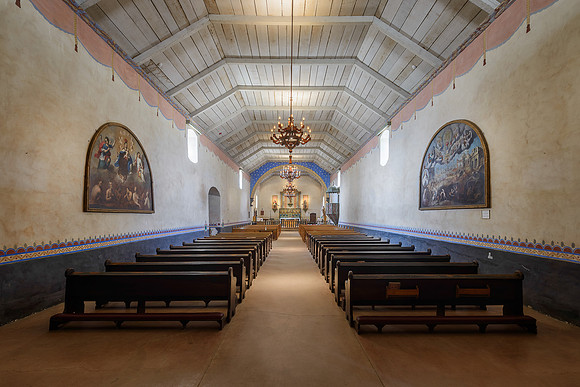
As I entered the massive, old church, I was disappointed to see that it was dark. Fortunately, my host granted my request and lit the church to my satisfaction for a series of photographs.
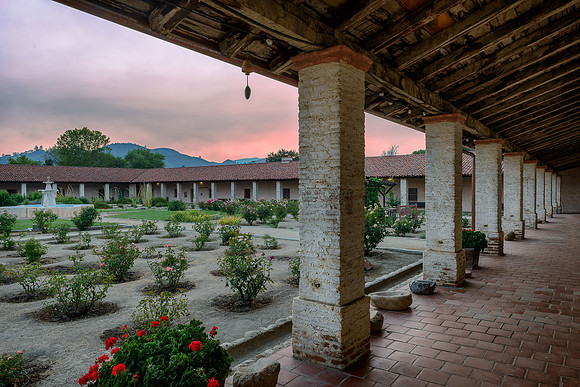
At first, I took advantage of having access to the grounds after hours. I had access to the dining room, courtyard and church. Without special access as an overnight guest, I couldn't capture many of the mission scenes in the best light--the colorful light that accompanies sunset.
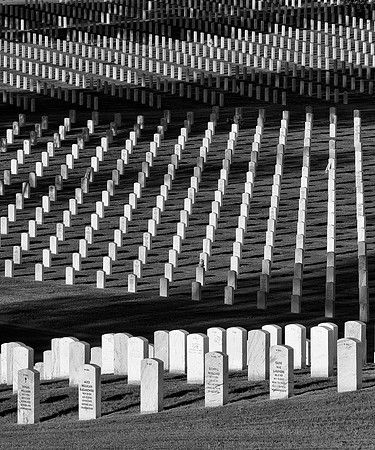
I prepared myself for a restless night. Like most of these very old complexes, this mission has a reputation of being haunted. It attracts ghost hunters. Just as when I was inside the abandoned Manteno Insane Asylum (which also attracted ghost hunters from around the country), I'm not nearly as concerned about the ghosts as I am about the people that the facilities might attract! In any event, about 30 minutes after the sun went down, I saw a car working its way up the road towards the mission. The retreat now had two more guests--an author and a writer who were working together on a project covering the California Missions. Having a couple of more people occupying some rooms within the retreat put my mind at ease enough for me to get a good night's sleep! More in FocusA few years ago I visited a national cemetery. In an effort to compress the many tombstones, I attached a telephoto lens to my camera and created several compositions. I knew that it would be challenging to get enough of the tombstones in focus in a single image with such a long lens. But, until I actually experienced the photo shoot, I had little appreciation for how challenging this actually is! The reason it is so challenging to get enough of the tombstones in focus is that the depth of field is relatively narrow, even at the narrower apertures, when using a lens with a longer focal length. Let's take a look at the 300mm 2.8 lens for a moment:
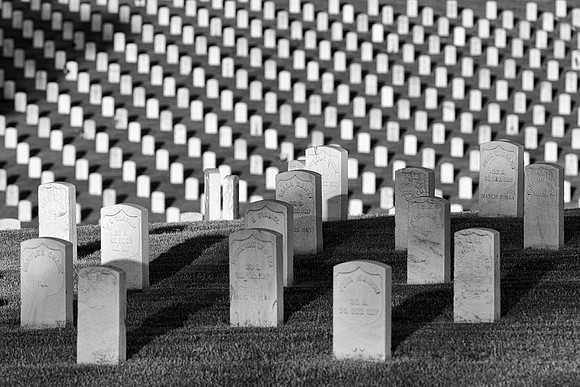
The lesson here is that even when a very narrow aperture is selected, it's impossible to get all of the tombstones in a large portion of the cemetery in focus. Last month, I visited the Chattanooga National Cemetery. This time, I used a different approach. For the photograph shown below, I used my Nikon 300mm lens and set the aperture at f/11. I took three exposures of the scene. I focused on a tombstone in the front of the frame for the first image, a tombstone in the middle of the frame for the second image and a tombstone in the back of the frame for the third image. During post processing, I blended the three images so that the tombstones throughout the entire frame are sharp! To accomplish this, I secured my camera to a tripod to minimize the chance of introducing camera movement between exposures. Here's the final image:
Of course, not all images must be sharp from front to back. Sometimes it's desirable to focus on one section of the image while letting the rest of the picture fall out of focus. I used this approach for this next shot--which required just one exposure:
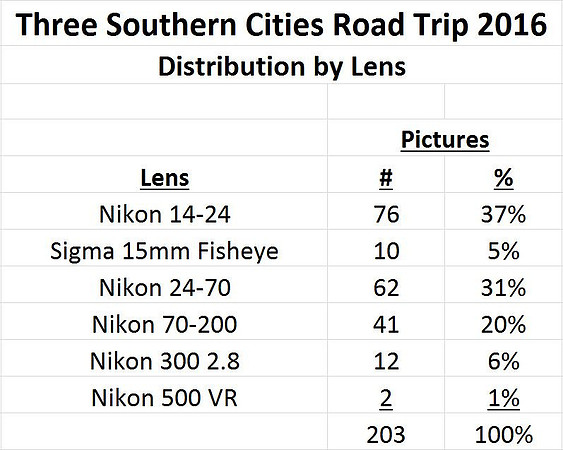
The more I shoot, the more I find value in capturing multiple exposures and then blending them during post processing to solve a number of challenges. Three Southern Cities -- Lens DistributionNearly every time I return from a trip, I'm asked about which lenses I used to capture the images. At the end of a trip, I like to look at the distribution of shots by lens. Here's how it looked for my most recent road trip to photograph the Three Southern Cities:
I used just one camera for the entire trip--the Nikon D800. Nearly 90% of my photographs were captured by one of Nikon's "Holy Trinity" of lenses--the 14-24, 24-70 and 70-200. Let There Be Light!While visiting Denver, I walked to two historic churches in hope of photographing the interiors. The first church, the Cathedral of the Immaculate Conception (opened in 1911), is within easy walking distance of the Colorado State Capitol. I photographed this church once before, but I wasn't satisfied with the pictures because the church was dark inside. This time, I timed my visit to enter the church at the end of a mass. I knew the church would be lit for mass. Once mass ended, I waited until nearly everyone left the church. As the scene cleared, I set up my tripod and prepared to shoot. Just then, the lights went off! So, I walked toward the sanctuary and hoped to find someone who might consider lighting the church for the photographs. Fortunately, somebody was there and granted my request to turn on the lights. They gave me about ten minutes.
Fortunately, the office was open. I asked if it would be possible to take pictures inside the church. My request was granted. I had access to the church for more than an hour. And, the lights were adjusted to my satisfaction! It's always a pleasure to have an amazing site like this to myself for an extended period of time:
"Joshua Tree" Wins Photo of the Day!This morning, my "Joshua Tree" picture won Imaging Resource's "Photo of the Day". CLICK HERE to view Imaging Resource's Photo of the Day page. This image was captured during my last road trip at Joshua Tree National Park in California. I camped inside the park, so I had convenient access to this scene as the sun was rising. This is the fourth picture from my last road trip to win a photo contest.
This marks the 36th time that one of my photographs was recognized by Imaging Resource as its "Photo of the Day". Click here to view all of the winning entries over the past few years.
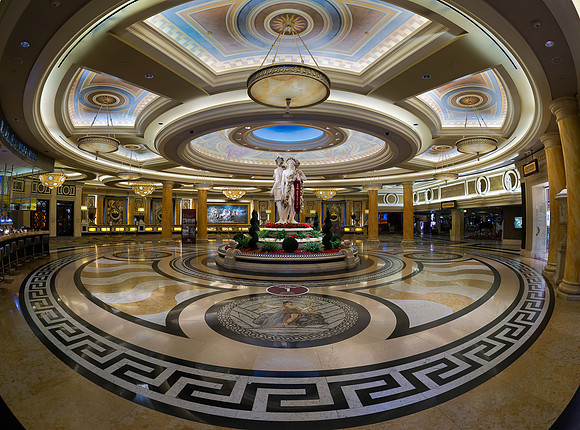
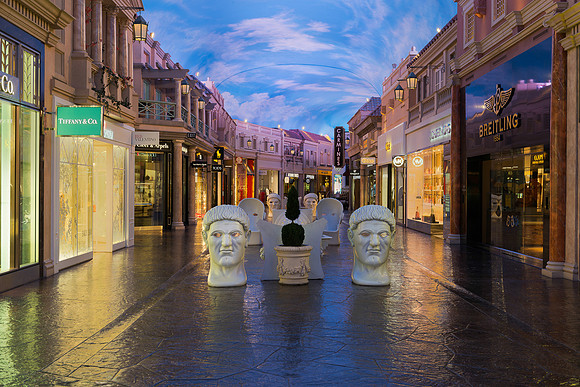
A Palace for PhotographyDuring my recent trip to Las Vegas, I hoped to photography some of the impressive hotel interiors. One of those interior spaces is the lobby at Caesar's Palace. I assumed that I would have only a few minutes of shooting before security put the kibosh to it. I started with this image:
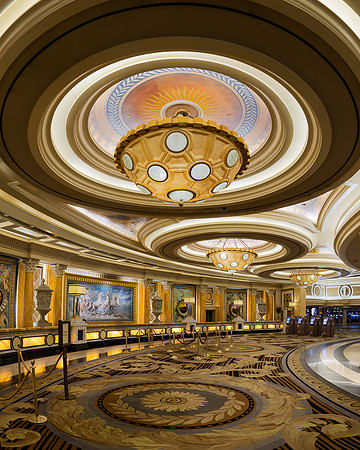
Since I didn't encounter any resistance, I proceeded to move closer to the registration desk:
So, I worked my way to the Forum Shops:
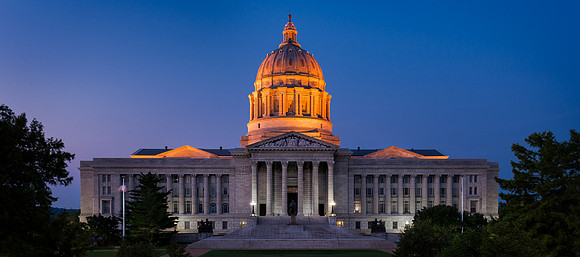
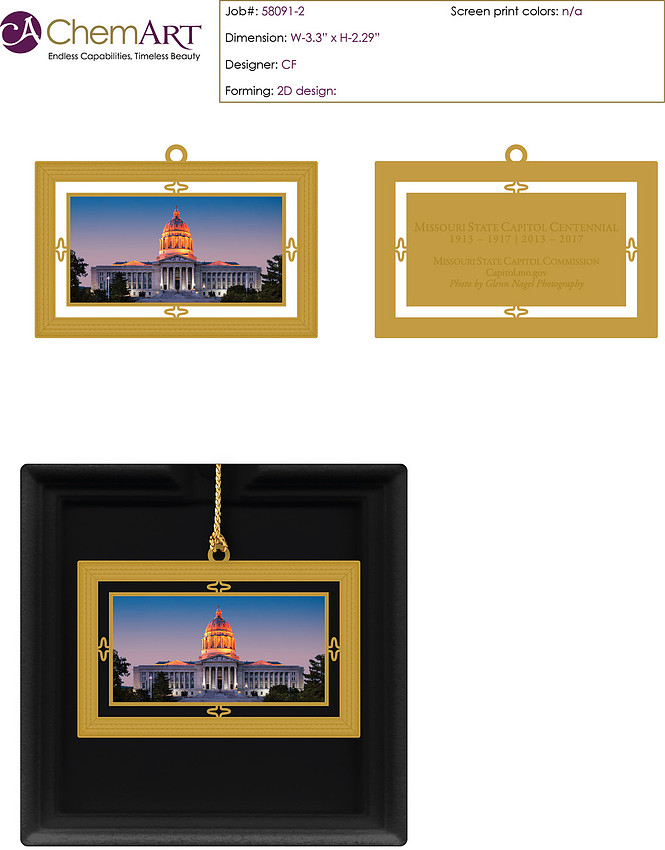
Caesar's truly was a palace for photographers that day! A Capitol ChristmasThe Missouri State Capitol Commission contacted me regarding a fundraising event it is holding in connection with the centennial of the Capitol's construction. The Commission in responsible for the improvement and restoration of the Missouri State Capitol building. The Commission will be using one of my photographs to create a special release of a centennial Christmas ornament. This is the photograph that was selected:
Des Moines CityscapeWhile in Des Moines, I captured a variety of cityscapes from various locations. One of my favorite vantage points is from the University Avenue bridge:
So, a lot more goes into the seemingly simple shot than first meets the eye! Prius EconomyDuring the summer, I took a 32 day road trip from Chicago to California and back. This trip covered 6,717 miles. My Prius achieved an overall gas mileage of 53.7 mpg for the trip. That means, I burned 125 gallons of gas over that month of driving. On average, I paid $2.15 per gallon. Today, gas is even cheaper! So, my final gas bill came to $268.00, or just $8.37 per day, for the entire trip. Some of the hotels in Los Angeles and San Diego cost nearly that much for a night. With the Prius economy and lower gas prices in general, the cost of gasoline is no longer a major expense--even for trips that cover thousands of miles over several weeks. Here's photo of the Prius in camping mode at Joshua Tree National Park in California. Prius camping places me in the most ideal locations for photography at the lowest possible cost.
|