
Cleaning House

For someone who shoots as often as I do, keeping the camera's sensor clean is an ongoing challenge. I tend to change lenses often in the field which make matters worse.
Initially, I didn't want to go anywhere near the sensor as I was afraid of doing permanent damage to my camera. After all, the camera manufacturers warn people not to ever touch the sensor. Of course, activating the automatic sensor cleaning function on my camera doesn't involve any risk. And, eventually I gathered the courage to expose the sensor and to use a Giottos Rocket Air Blower to keep my sensor relatively free of dust particles.
But, there came a day when neither the automatic sensor cleaner nor the air blower would remove the particles from my sensor. So, I resorted to the dreaded wet cleaning method. This method requires applying a cleaning solution to a pad and then wiping the pad directly across the sensor.
After my first swipe of the sensor, I reattached the lens to the camera, captured an image at f/22 and then inspected the results on my computer. My sensor was still an absolute mess. So, I tried again...and again...and again. After 15 attempts, the sensor was actually getting worse! The biggest challenge is not being able to see the particles on the sensor and the delay in getting feedback on the results of the cleaning attempt (i.e., having to take an image, upload it, and inspect it on the computer after each try).
So, I brought my camera into APS (Authorized Product Service) in Morton Grove. APS did a nice job cleaning my sensor for $45 while I waited. This is a much better deal than using Nikon's Service Center in Melville. Nikon charges more for a cleaning and requires that my camera be shipped to New York. When using Nikon, I'm usually without my camera for the next two to three weeks. Yet, using APS is also a hassle--from the 60 mile round trip drive through the city to the hour long wait while the sensor is being cleaned. Worse yet, my sensor was dirty again three months later!
So, after shooting with digital cameras for the past 7 years, I decided that I finally needed learn how to clean my own sensor. One tool, the Visible Dust Quasar Sensor Loupe 7x has made the cleaning process possible for me.
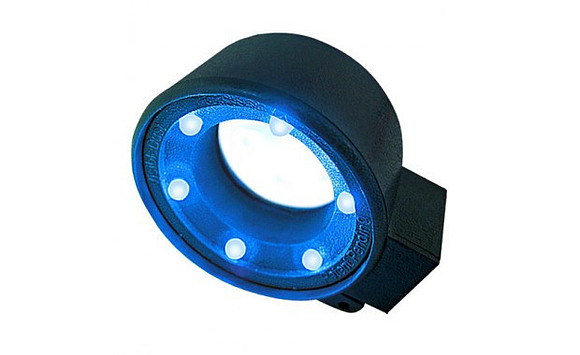

Here's a summary of my first attempt at cleaning the sensor using this loupe:
- Used loupe to view sensor. Noticed several dust particles.
- Used the air blower to try to remove the particles and viewed the sensor again...only three dust spots remained.
- Used a sensor brush to try to carefully lift the three particles...and quickly viewed the sensor again.
- Two of the spots must not have been dust particles, because they smeared...as I could easily see by viewing the sensor with the loupe.
- I then applied a cleaning solution to a pad and wiped the sensor with the pad. By viewing the sensor with the loupe, I could see that the smears were now spread thinner and across more of the sensor.
- I wiped the sensor a second time with a new pad (another $3). The smears were even thinner now.
- One last swipe with a wet pad left my sensor clean with the exception of one new dust particle.
- A final blowing of the sensor with the rocket blower cleared that last piece of dust.
I now have a clean sensor! The sensor solution and swabs aren't cheap, so my sensor cleaning process came at a $9 cost (3 wet pads). But, I completed the job in less than 15 minutes. This was a much better driving to APS or shipping my camera to Nikon. Either of those approaches is far more costly and results in weeks of downtime for my camera or a long drive to APS.
Most of the time, it should take less time to clean my sensor and at a lower cost. The vast majority of the time particles are more easily removed by using just the air blower...or perhaps the brush. The wet cleaning method will generally be an exception--to be completed twice a year and with fewer swabs for each cleaning.