|
I'll be posting some random thoughts here about my photography: my travel plans, technical information behind some images, stories about how certain pictures were captured, etc. The timing of the postings will also be random as my priority is capturing new images rather than writing about existing ones. I hope you will feel free to comment on any of my postings and I appreciate you taking time to read my entries.

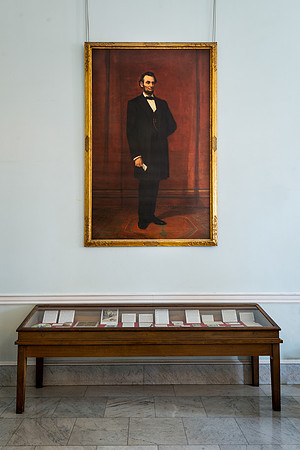
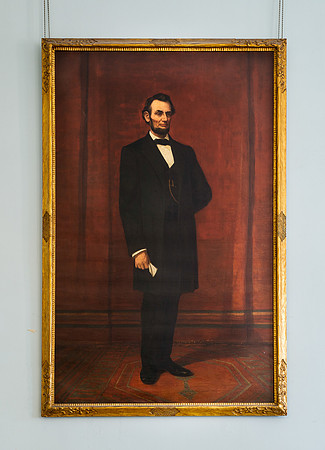
"It'll Cost You an Arm and a Leg"While visiting the Massachusetts State House in Boston, I photographed an oil painting of Abraham Lincoln that is on display in the lobby. During the tour, the guide pointed out a few interesting things about this portrait:
The guide also mentioned that subjects would often pose with one arm behind their back. The reason for this is that painters would charge substantially more for a painting if the limbs were to be included. The addition of arms and legs added to the cost. Hence the expression, "Okay, but it'll cost you an arm and a leg."
Wooden Shoe FactoryWhile visiting Holland, Michigan, I entered Veldeer's Delft Factory and DeKlomp Wooden Shoe Factory. I asked if it would be OK to take photographs inside the building. I was pleasantly surprised that the answer was yes! After I captured a few images, I mentioned how unusual it is these days for photography to be permitted inside a place like Veldeer's. The employees at Veldeer's were surprised that anyone would object to photography. They asked me why others would have a problem with someone taking pictures. They said that people like taking pictures at Veldeer's as it's considered to be a tourist attraction. So, I was able to capture a series of images inside the store/factory. These pictures were taken with the camera secured to a tripod. Several of them are comprised of multiple exposures blended to create high dynamic range photographs. Click here to view the images from this photo shoot. Here are a few images from Veldeer's. It's not everyday that one has an opportunity to photograph a wooden shoe factory!
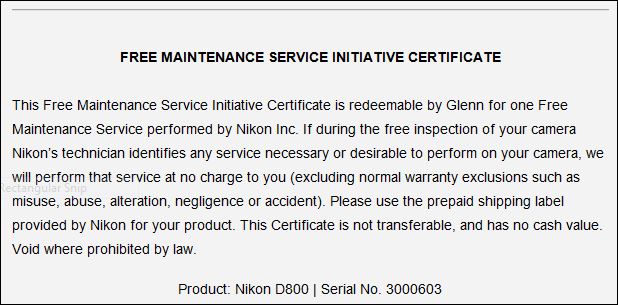
Free Nikon ServiceI just returned from a three week road trip through the Capital Cities of the Northeast. During that trip, I experienced a variety of equipment issues. These issues related to my tripod (the legs keep slipping and require more tightening than usual), the RRS ballhead (the clamp won't loosen making it difficult to remove the camera), my vertical grip (the controls aren't functioning) and my camera. I'll go into more detail about the tripod, ballhead and grip in a later post. This post is dedicated to the camera. It's not surprising that my Nikon D800 is beginning to experience a few issues. I purchased it as soon as Nikon made it available about 3 1/2 years ago. My camera has 70,000 actuations now and I have done nothing to maintain it other than sensor cleanings. During this trip, the pad on the back of the camera that moves the autofocus point within the frame stopped working on occasion. Also, the autofocus failed to work on a few occasions. Of course, after capturing thousands of images over the past three weeks and making countless lens changes in the field, the camera needs a good cleaning as well. Given this, I was pleased that Nikon has offered to clean and inspect my camera for free! I received the following offer from Nikon in a recent email:
When I first received this offer, I was skeptical. I've been using Nikon equipment for years and never received an offer like this before. I thought maybe this was a scam in which someone was trying to collect a bunch of cameras. But, it's a legitimate offer. I checked with other photographers who have already taken advantage of this offer. And, the serial number that's referenced is correct and the shipping address is accurate as well. This is a perfect time for me to send my camera in for repair. I have thousands of pictures to sort through over the upcoming weeks, so I probably wouldn't have been shooting very much in the near future. Thanks Nikon! "Gateway to the Moon" Wins Photo of the Day!This morning, my "Gateway to the Moon" picture won Imaging Resource's "Photo of the Day". CLICK HERE to view Imaging Resource's Photo of the Day page. This photo was captured just two ago on a brief photography trip that I made to St. Louis. This photo was recently featured in the Image Talk column of Apogee Photo Magazine.
This marks the 28th time that one of my photographs was recognized by Imaging Resource as its "Photo of the Day". Click here to view the other 27 winning entries over the past three years.
The Security RepairmanOver the years, I have owned several camera bags. There are at least five bags stored in my closet at this time. Of these bags, my favorite one by far is the Think Tank Antidote v2.0. I like the Think Tank bag best because it holds so much gear in a relatively small space. Most times, I carry the following in the bag with room to spare:
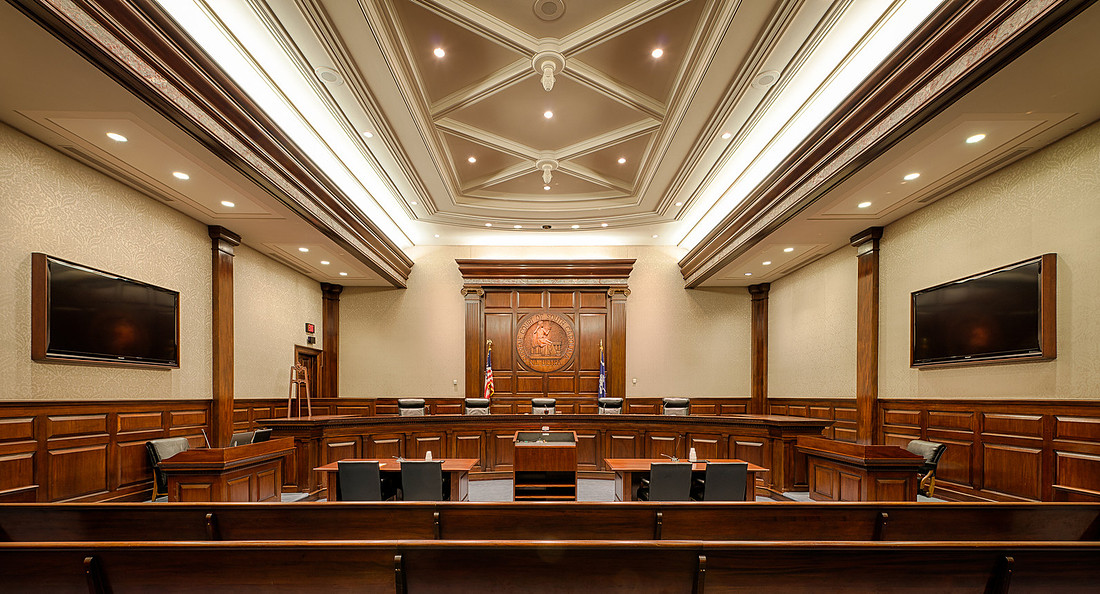
Although I have to remove some lenses, the bag is capable of holding my 500 VR. This amount of storage comes in handy when traveling as the bag is designed to fit into the overhead compartment of an airplane. While taking pictures in the South Carolina capital city of Columbia, my Think Tank bag finally failed me. I was photographing the interior of the South Carolina Supreme Court building when the zipper of the backpack somehow got off track. No matter what I did, I couldn't get the bag zippered up. Since I had some heavy gear in the bag, it was going to be a major task carrying all of it without being able to strap the backpack onto my back. I wasn't looking forward to walking more than a mile back to my parked car with 25 pounds of cumbersome gear in my arms! To my surprise, the courtroom security guard came to the rescue. He worked on my bag for quite some time. After ten minutes or so, he somehow got the zipper working again. And his repair has stood the test of time so far--the zipper is still working like when it was new. I was grateful as not only did it make the hike back to the car a lot more comfortable, but I still had a couple of weeks left on my photography trip through the Southeast. Here's the last shot that I captured in the courtroom before the zipper gave out:
Hanging by a ThreadWhile walking the Capitol grounds in Columbia, South Carolina, I noticed a couple of men washing windows on a high rise building. The two men started at the top of the building and were working their way down to the ground. I wasn't sure if they would do another rotation (which they didn't), so I ran back to the car to grab my telephoto lenses. For a brief time, there were two window washers to choose from. Before long, the man on the left reached the ground. His work was done. I was left with just one window washer for the next 30 minutes or so. This was an unexpected photo subject for me. I enjoyed taking pictures of this activity. It was like watching an adventure sport! Later, I learned that this kind or work typically pays between $15 and $25 per hour. There's no way I would get up there for anywhere near that level of pay--or any amount of pay for that matter!
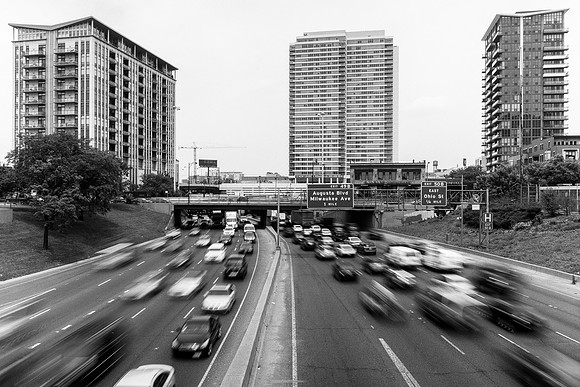
Long Exposures in DaylightOne way to make a photograph more interesting is for it to be different from other pictures in some way. A couple of days ago, I was walking on Lake Street across I-94 in Chicago. My idea was that a longer exposure might make this image a little different than the norm. By using a longer exposure, the moving vehicles blur while the surrounding landscape remains in sharp focus. It's easy to dial in a slow shutter speed to create a long exposure at night. It's more challenging during the day. In the bright conditions, even the narrowest aperture and lowest ISO setting results in a shutter speed that's too fast to create the blur. I used the following steps to blur the traffic:
The resulting shutter speed was nearly a full second (0.8 seconds)...slow enough to create the blur. For more blur, I would extend the shutter speed to taste. This would be accomplished by using a stronger neutral density filter. Or in the case of my Vari-ND filter, I simply rotate to filter to strengthen the effect (anywhere from 1 to 8 stops). I also have a 10 stop ND filter. Another factor in the equation is the speed of the traffic! When the traffic is inching along, it takes a far longer shutter speed to create blur. If the cars are speeding along at 60 miles per hour, a much faster shutter speed will still blur the vehicles. Fortunately, the LCD screen on the back of the digital camera provides instant feedback so shutter speed adjustments can be made instantly. The key to creating a photograph like this is the ND filter. Without it, it's not possible to set the camera for a long enough shutter speed without overexposing the image.
Doors of Oak ForestI noticed a colorful display that resembled a jigsaw puzzle while driving on 159th Street near Cicero Avenue in Oak Forest, Illinois. So, I pulled over to capture a few photographs.
Please click here to view all of the images from my visit. 41.5 Million TilesDuring May, I took a brief photography trip to St. Louis. I like to capture pictures of Places of Worship, so my first stop was the Cathedral Basilica of Saint Louis. When I entered the church from the bright daylight, the interior of the church appeared to be pitch black. I could hardly see anything. So I asked if there was any possibility to get the lights turned on inside the church--or if there was a better time to visit when the lights would be on. I was told that the lights (and he was referring to the floods) are only turned on during mass. Since photography is prohibited during mass, it's impossible to take pictures with the lights on. In time, as my eyes began to adjust to the dark interior, I gradually could see more. And, it always amazes me what my camera sensor can see if the exposure is long enough! In the end, I was pleased with the photographs from the Basilica. Click here to view 16 images from the cathedral. While walking around the Basilica, I estimated that there must be a million mosaic tiles in the church. My estimate was low. In fact, there are 41.5 million glass tiles in the Basilica in more than 7,000 colors. The tiles cover 83,000 square feet. It's the largest collection of mosaic tiles in the world!
Northeast Capital Cities Road Trip ItineraryThis summer, I plan to continue my quest of visiting capital cities throughout the United States. This upcoming road trip covers 9 State Capitals--bringing my total to 48 capitals. Here's my preliminary itinerary: Day 1: Somerset, PA Day 2: Annapolis, MD Day 3: Annapolis, MD Day 4: Dover, DE Day 5: Trenton, NJ Day 6: Philadelphia, PA Day 7: Hartford, CT Day 8: Providence, RI Day 9: Providence, RI Day 10: Boston, MA Day 11: Boston, MA Day 12: Boston, MA Day 13: Concord, NH Day 14: Augusta, ME Day 15: Augusta, ME Day 16: Acadia National Park, ME Day 17: Acadia National Park, ME Day 18: Acadia National Park, ME Day 19: Montpelier, VT Day 20: Montpelier, VT Day 21: Cleveland, OH Day 22: Cleveland, OH Day 23: Orland Park, IL I like to spend a couple of days in the cities. That way, I can visit more local attractions than just the Capitol building. As you can tell by the itinerary, I also plan to visit some "non-Capital" cities--such as Philadelphia and Cleveland. I've always wanted to photograph the Eastern State Penitentiary in Philadelphia and I've already been granted permission to photograph the interior of the Cleveland Public Library. I've also dedicated three days for landscape photography in Arcadia National Park, Maine. This trip covers 23 days and just over 3,000 miles. Once I return, I will have visited all of the State Capitol buildings in the Lower 48 states! |