|
I'll be posting some random thoughts here about my photography: my travel plans, technical information behind some images, stories about how certain pictures were captured, etc. The timing of the postings will also be random as my priority is capturing new images rather than writing about existing ones. I hope you will feel free to comment on any of my postings and I appreciate you taking time to read my entries.

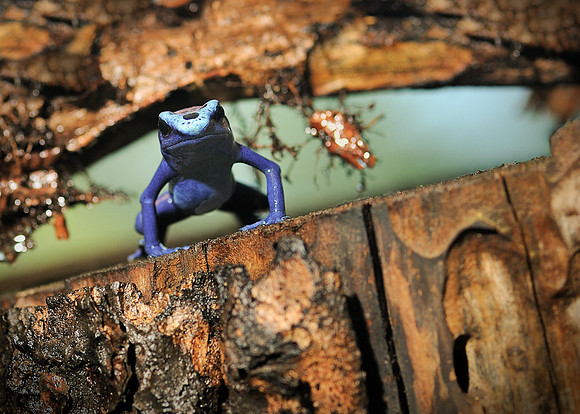
Shooting Through GlassWhile visiting the Brookfield Zoo, I captured some photographs of the blue poison frogs. One challenge with taking pictures of the frogs is that they are housed behind very thick glass. Having thick glass positioned between the camera and the subject certainly doesn't help the image quality! But, there are some things that can be done to create an acceptable photograph:
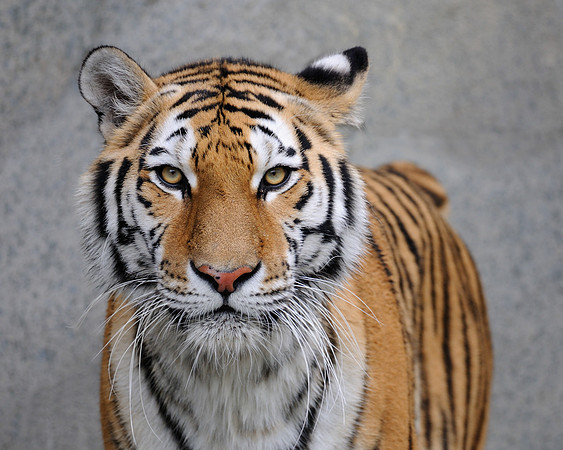
Brookfield Zoo Photo ContestOne of my favorite places for photography is the Brookfield Zoo. Not only is the zoo filled with interesting subjects, but the zoo encourages photography! Unlike many other public venues, tripods are allowed. Flash photography is also permitted in many of the exhibits. And, every year the zoo hosts a photo contest. I never know exactly what kind of photos the judges are looking for in this contest. The winning photos of the past offer little clue as they are all over the place. And, the aspect ratio is limited to 4x5. Very few of my zoo photos fall within that aspect ratio. Now that all of my excuses are out of the way...here's my entry for this year's contest:
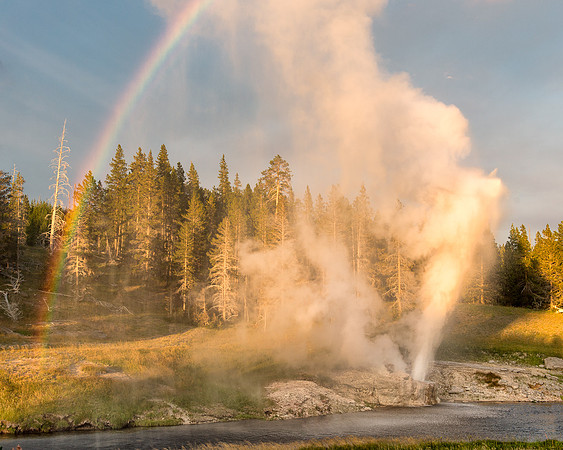
Call the Geyser Hotline!One challenge in photographing geysers is being there at the time of the eruption. During my visit to Yellowstone, I was fortunate to witness the following geysers erupt: Old Faithful, Grand, Riverside, Daisy, Beehive and Lion. If you see a crowd gathered by a geyser, chances are that it will erupt in the near future. While I was visiting, there were several well informed viewers who understood what to look for as indicators of an impending eruption for each geyser. They would radio others and before long a large gathering of people would be on hand to witness the eruption. For this shot of the Beehive geyser, a man was sitting in a lawn chair on the boardwalk near the geyser. Although the geyser's next eruption was classified as "unpredictable", he noticed indicators that the geyser would erupt within 15 minutes. He warned me that if I stayed near him, I wouldn't just get sprayed--I would get drenched! Keeping in mind that this sulfur water would do a number on my lens, or glasses for that matter, I moved away from the geyser and included the gathering crowd in the frame to provide some perspective.
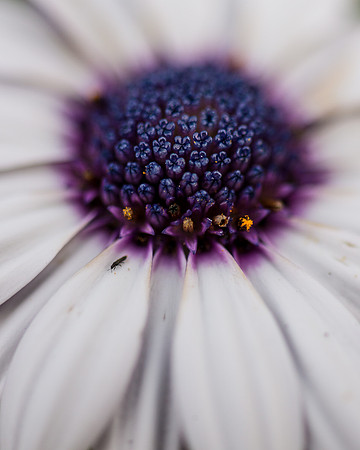
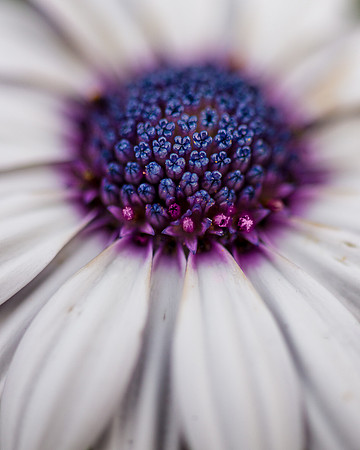
Touching Up ColorsSometimes, a photo can be improved by adjusting the colors in just a few small areas of the frame. This was the case with this closeup photograph of a white and purple daisy. Included in the original image were some distracting yellow and brown areas within the purple center as well as a small insect on one of the petals.
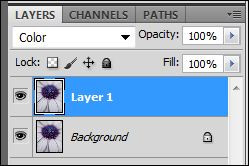
I duplicated the original layer and designated the duplicate as a "Color" layer.
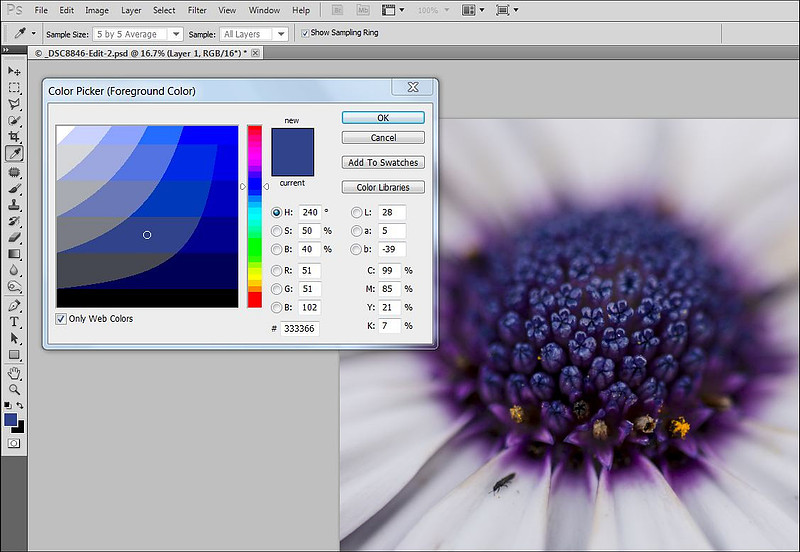
I then selected the Brush tool and picked a foreground color that exactly matched the purple of the flower.
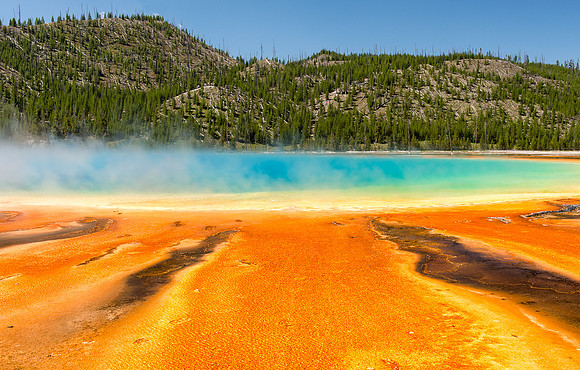
Lens CollateralWhile visiting Yellowstone National Park during my recent trip, I very much enjoyed taking photographs of the Prismatic Spring.
While I was photographing the spring, hundreds of other tourists were walking the boardwalk. It was so crowded, that it was difficult to find an open second when the boardwalk wasn't shaking from walkers. In the midst of that large crowd, one man carrying a Nikon camera approached me and asked if he could borrow my prized 14-24 lens! He said that he was visiting from China and had only a few more minutes at the spring--so he didn't have time to hike to his car for his 14-24. He was with a small group of people who had a flight to catch in Salt Lake City. To be honest, I was very hesitant to grant his request. For one thing, the 14-24 is an expensive lens. And, I am far more careful with expensive optics than most photographers. Also, I just met the man--and there was little to stop him from getting lost in the crowd or simply walking away with my lens. He must have sensed my hesitation, because he quickly offered his Nikon 24-70 lens as collateral! He pointed out that the two lenses were priced approximately the same. And, he said that if he were to walk away with my lens, I would have one of comparable value in its place. Little did I know that my own 24-70 would be destroyed just a few days later in an accident at Glacier National Park! As it turns out, the man from China was to be trusted. He enjoyed using my 14-24 for a few photographs. He then asked if I would take some photos of him with his group in front of the Prismatic Spring. I gave him a business card before he hiked back to his car. So, it's very likely that he will be reading this blog entry at some point! Slow the ShutterDuring my recent trip to Yellowstone National Park, one of the accessories I reached for most often was a neutral density filter. This filter blocks some of the light from reaching the sensor--which allows for slower shutter speeds. I like the affect that a longer exposure brings to many of the photographs that include water or clouds.
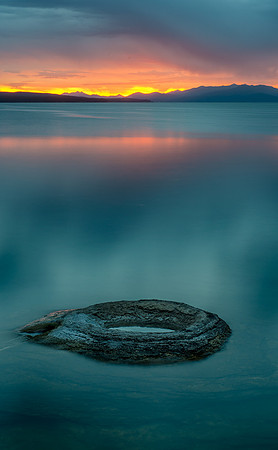
I use the Singh Ray Vari-ND filter. This variable filter allows me to dial in the intensity of the filter from two to eight stops. I simply set the ISO and aperture on my camera--and then rotate the Vari-ND filter until I achieve my preferred shutter speed! When using very wide angle lenses, vignetting is something to keep an eye on as the edges of the filter may enter the frame and darken the corners of the photo. The variable neutral density filter is expensive. But, you also need to consider that it replaces multiple filters in your bag. As the story goes, years ago fishermen would catch fish in the lake and then dip them into the Fishing Hole to cook. The water inside the cone is boiling! The national park service no longer allows Fishing Hole to be used as a cooking device. The Land of Midday ShootingThe vast majority of landscape photography takes place during the magic hours--the hours surrounding sunrise and sunset. As I learned during my recent trip, the geyser basins of Yellowstone National Park are an exception to this general guideline. During midday, the sun is high enough in the sky for the light to reach deeper into the colorful pools!
Let There Be LightThe Chapel of the Sacred Heart is located in Grand Teton National Park and is open to the public. While I was inside taking pictures of the church, a woman was there vacuuming the carpets. She asked me if I would prefer to have the lights on. Of course, the interior of the chapel looks much better when it's lit. Once I captured a series of photos, she turned off the lights and left. Since the light switch is not accessible (she had a key to the door for the light switch), I was lucky to be in the church during that short window of time when it was being cleaned!
When It Rains, It Pours!Two days ago, the editors at 500px selected my "Desert Highway" photo as an Editors Choice. The guideline used by the editors is that the image falls within the top .01% of all submissions (1 in 10,000)!
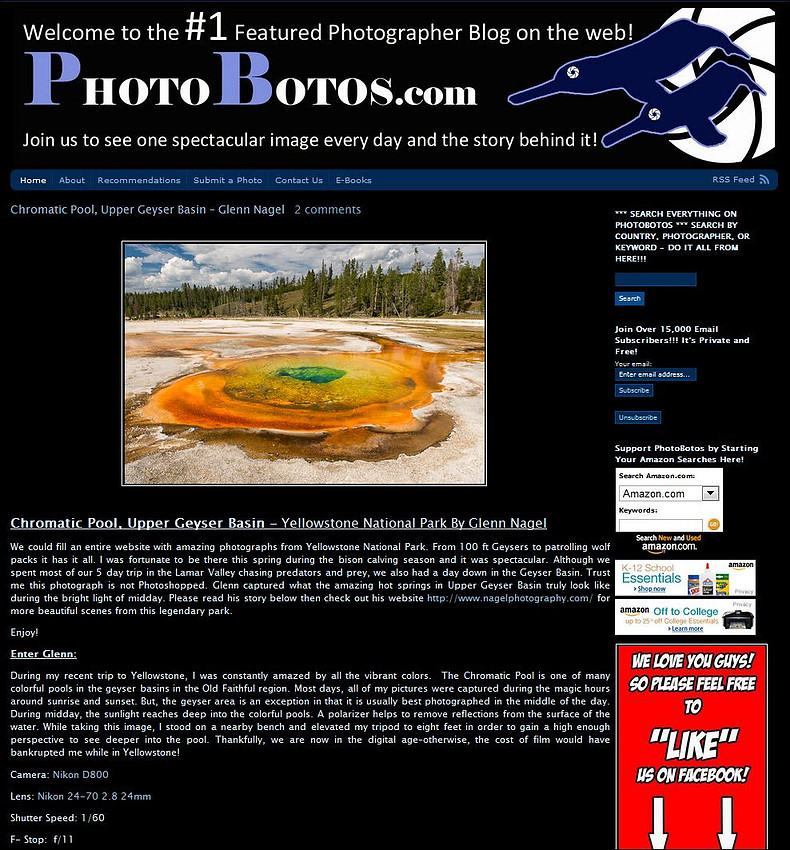
Today, I was honored to have my "Chromatic Pool" photograph selected by PhotoBotos.com as the "spectacular image of the day" today! The site is "built to showcase one amazing photograph per day from around the world" and is expected to attract 30,000 viewers to the image.
Here's a copy of the page from today:
It's been an amazing week!
One in Ten Thousand...Yesterday, the editors at the 500px website recognized my "Desert Highway" photograph with an Editors' Choice designation. The guideline that the editors use is that one photograph is selected out of every ten thousand entries! So, yesterday was my lucky day!
Here's a closer look at the picture:
|