|
I'll be posting some random thoughts here about my photography: my travel plans, technical information behind some images, stories about how certain pictures were captured, etc. The timing of the postings will also be random as my priority is capturing new images rather than writing about existing ones. I hope you will feel free to comment on any of my postings and I appreciate you taking time to read my entries.

Reaching OutWhenever possible, I use a tripod. However, sometimes it's impossible to set up a tripod for certain shots. This is often the case when I'm shooting staircases. During my recent trip to Minnesota, I stopped by the Overture Center for the Arts in Madison, Wisconsin. A staircase inside the building caught my eye. I climbed to the top of the staircase to capture this photograph:
There was no way for me to capture this perspective while using the tripod. The only way to gain this perspective--which allowed me to see the steps leading all the way down to the floor--was to extend the camera out far past the railing. As you can imagine, it can be unnerving to be holding an expensive camera and lens that far over the railing! Note that the railing which is in contact with my waist appears at the bottom of the frame. To accomplish this, I use the Live View feature on my Nikon D800. Live View allows me to view the image through the LCD screen on the back of the camera. With the camera in my outstretched arms, it's not possible for me to look through the viewfinder. Other considerations for a shot like this include boosting the ISO in order to generate a fast enough shutter speed for handholding the camera. In this case, I selected an ISO setting of 400. That gave me a shutter speed of 1/80th of a second at an aperture of f/8. At such a wide focal length (14mm), it's not difficult for me to capture a sharp image of this scene at 1/80th of a second without a tripod. Of course, if it was possible to use the tripod, I would have dialed in an ISO setting of 100 and let the shutter speed take care of itself--which would have been 1/20th of a second (too slow for handholding). Just a day later, I used the same technique to capture another staircase image--this time at Centennial Hall on the campus of St. Cloud University in Minnesota. The settings for this next shot were more extreme. Because this staircase was much darker, I had to boost the ISO all the way up to 2,500 while opening the aperture to f/5. Even with these aggressive settings, I pushed the limits with the shutter speed at 1/40th of a second.
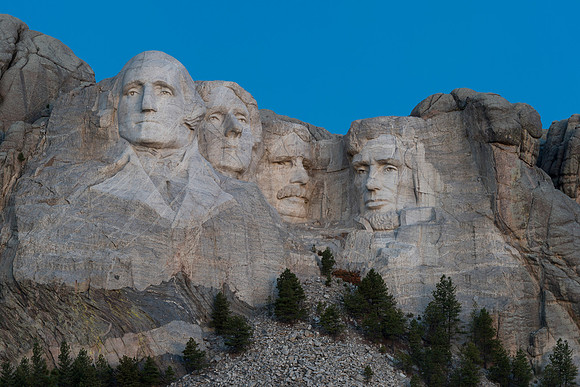
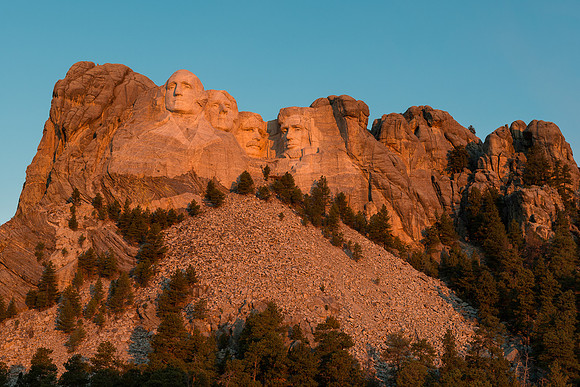
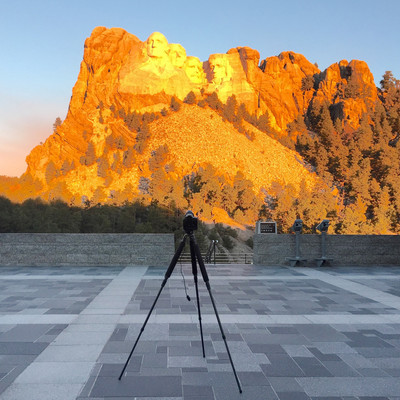
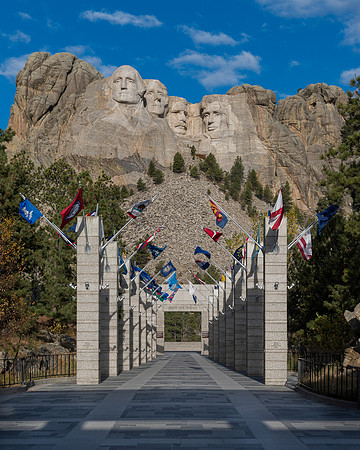
Sometimes, it's either ditch the tripod or don't get the shot at all! Alone at Mount RushmoreDuring my last road trip through South Dakota, I visited the Mount Rushmore National Memorial. Mount Rushmore is one of those iconic locations that is almost always crowded with tourists. This time, I had Mount Rushmore to myself! While planning my photo shoot, I was surprised to learn that the grounds at Mount Rushmore opened at 5:00 AM. That early opening meant that I could be at Mount Rushmore for sunrise! Sunrise was at a far more convenient time on the day of my visit (October 31st)--7:28 AM. So, I arrived at the memorial at 6:45 AM. My car was the only one parked in the first level of the parking garage. As I walked toward the monument, I did see a park ranger somewhere near the entrance. That was the last person that I saw for the next 90 minutes or so. Often times, I enjoy shooting in the soft light just before sunrise. This is my first shot from that morning--taken about 30 minutes before sunrise:
A short while later, I walked the Presidential Trail to get closer to the monument. I didn't come across a single person while walking the 1/2 mile trail:
I spent three or four hours visiting Mount Rushmore that morning. That's far more time that I've dedicated to the area in past visits, but it was well worth it. It gave me time to capture a lot of photographs, walk the Presidential Trail, and visit the Museum and Visitor Center. I returned later that night to see the illuminated faces--but I wasn't thrilled with that lighting:
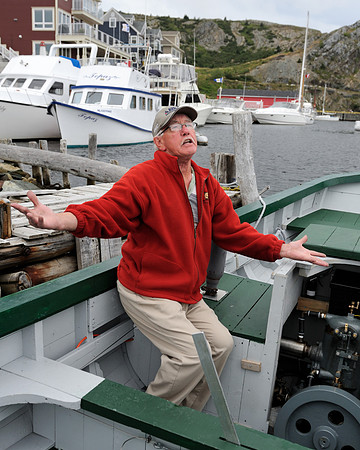
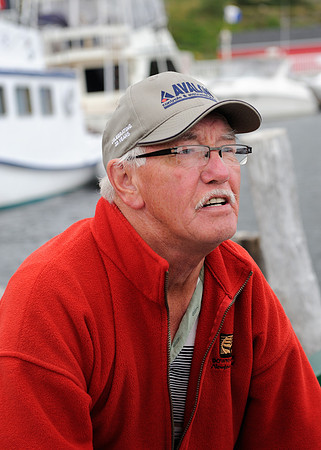
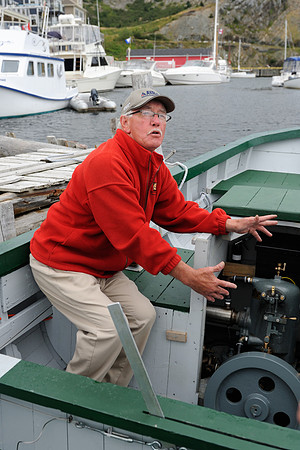
The Make and Break ManIt's amazing what you get to see when you travel! Back in 2010, I participated in Raymond Barlow's very first photography tour. This tour of Newfoundland included just three participants and Ray (our guide). While walking around Brigus Harbor, we came across a man by the name of Max Clarke. Max was clearly very proud of both of his boats. He spent a good deal of time showing us the engine that's featured in the video. And, he invited the four of us onto his larger boat ("Sugar"), where his wife (named Sugar) served us hot tea and cookies. Max was very entertaining, had a lot of great stories and was very hospitable. I seem to remember something about him telling us how the Canadians defeated the United States in some battle a couple of hundred years ago. In any event, it was a memorable experience. Yesterday, one of the tour participants forwarded a Land & Sea video story about Max Clarke from August, 2015. CLICK HERE to see the film. Having no knowledge of engines or boats, I had little appreciation for what Max was showing us at the time. Now, watching the video gives me a greater understanding of what he accomplished. Here are few photographs that I captured during our visit. Max was so involved in telling his stories that he didn't appear to be aware that I was shooting--and I was just a few feet away from him with a wide angle lens!
Bear Butte Barn Photo ShootBefore leaving for my road trip through South Dakota last month, I planned at least one or two photos shoots for each day of the trip. For my last day of shooting, my plan was to shoot an old barn near Bear Butte State Park at sunrise. This photo shoot was important to me because I like how this barn is positioned on the plains with the butte in the background. Here are some of the specific steps of my planning process:
I started watching the weather forecast for the Bear Butte area a few days prior to the shoot. The forecast was not promising. On the night before the shoot, the forecast called for overcast conditions with a 90% chance of light rain. Given the small chance of shooting in acceptable conditions and the amount of effort required to check out of the hotel in time to arrive at the location before sunrise, I canceled the photo shoot. I stayed up late watching TV and planned a different photo shoot for an afternoon in Rapid City. It was about 5:30 AM when I woke up and decided to reach for my phone to check the weather forecast one last time. To my surprise, the forecast had improved. There was a window of time around sunrise when the skies might open up enough for some light to hit the barn. I started moving very quickly to get packed and out of the hotel in about 15 minutes! The employee at the front desk of the Hampton Inn even handed me a breakfast bag on my way out! My GPS unit led me right to the barn. I ended up shooting the scene for over an hour. I captured some images in the soft light before sunrise and also in the more direct and warm light just after sunrise. I kept shooting until the light became too harsh. Here is one of the images of the barn from the photo shoot:
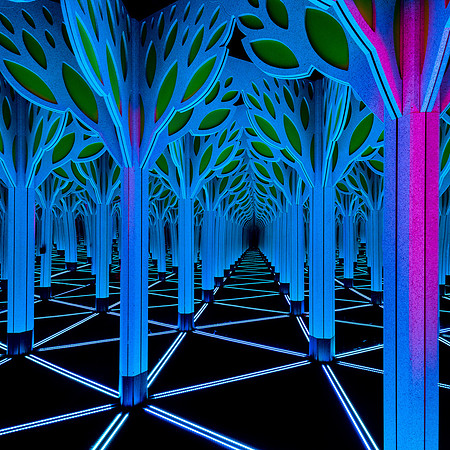
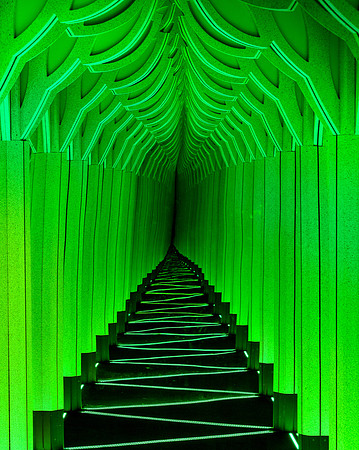
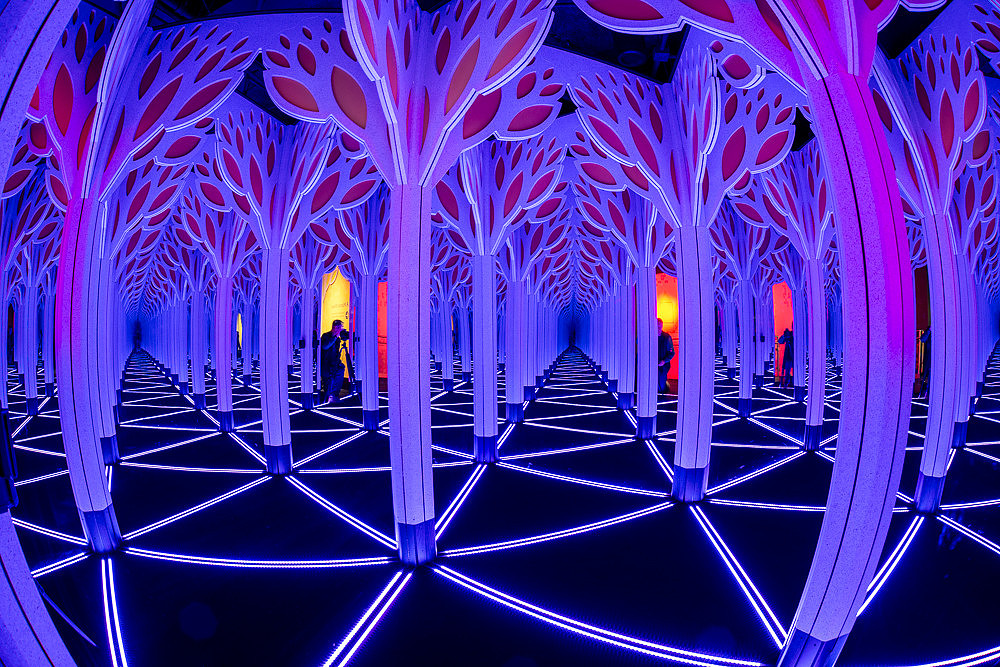
Challenging as a MazeEarlier in the year, photographed a unique subject--a mirror maze! Here are a few images from the photo shoot:
To view more images from the maze, please click here. Shooting in the maze is very challenging. For one thing, it is nearly impossible to capture an image without having me (and my tripod) reflected in the mirrors. Here is one of the unedited images straight out of the camera. Note how I can be seen in various parts of the frame. Most times, my reflection is far more distracting than in this image.
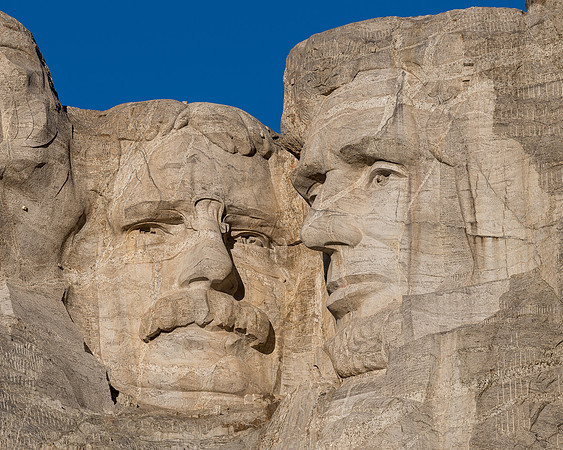
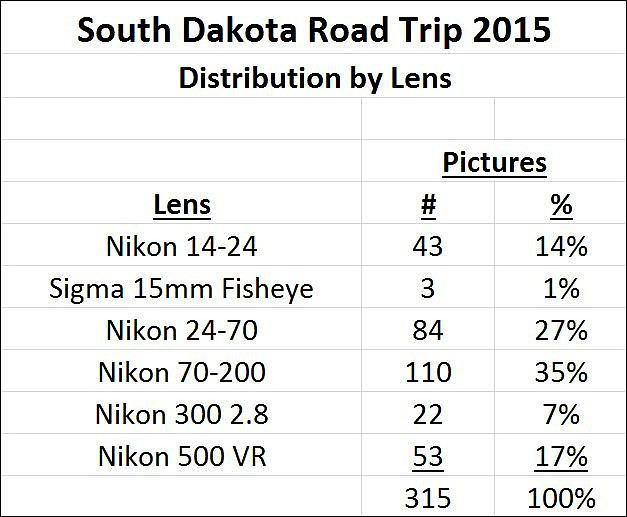
Next, the mirror maze is a popular attraction within the Museum of Science and Industry in Chicago. It's difficult to capture a frame that's free of visitors. It's also very dark inside this exhibit. This means that a long exposure is required--which increases the chances of someone walking into the picture. Additionally, the colors change and cycle through from blue to red to green. Given the slow shutter speed that's required in the dark conditions, it's not easy to capture the photograph before the color changes. I boosted my ISO to 400 to try to combat those problems as the higher ISO setting enabled me to choose a faster shutter speed. I was fortunate to get as many pictures as I did before security made me pack up my tripod! Lenses of South DakotaAfter returning from a photography trip, I like to analyze how often I use each lens. During my last trip through South Dakota, I used longer focal lengths more often than in my previous trips through the various capitol cities. I tend to use the wider focal lengths offered by my Nikon 14-24 more often when shooting architectural subjects. In South Dakota, I used the longer focal lengths of the Nikon 70-200 quite frequently while shooting landscapes. I like the compressed look that the telephoto lens creates for many of the landscapes. Of course, wildlife shots often call for the longest lenses that I own. On a typical day, the following lenses were placed in my backpack: (1) Nikon 14-24; (2) Nikon 24-70; (3) Nikon 70-200 VRII; (4) Nikon 105 VR; and (5) Sigma 15mm Fisheye. The first three lenses are often referred to as the "Holy Trinity". That trio of lenses covers the focal lengths from wide to narrow (14mm through 200mm). All three lenses are fast (f/2.8) and sharp. During the road trip, I considered 314 images to be keepers. Those are the images that I processed. The Holy Trinity of lenses accounted for 76% of these photographs. The 500 VR was used extensively on the last day of the trip for capturing animal portraits at Bear Country, USA in Rapid City. It also came in handy for some close up shots of Mount Rushmore and the Crazy Horse Memorial. I probably shouldn't have bothered carrying the Nikon 105VR in my bag as I didn't capture a single picture with it this time.
In and OutSometimes I see what I think would be an excellent photograph, but cannot access the scene. This often happens when I'm driving along an interstate highway. I see something that has potential to be a great image, but I am not able to safely pull of the highway to capture it. The scene is not readily accessible. While walking down the streets of Columbus, Indiana I came across a similar situation. There's a long, narrow corridor in an office building--and I really liked how the light was casting shadows along the walls. I love taking pictures of corridors! My problem is that the scene was just out of my reach. I could see it clearly enough through the clear door, but a locked door stood between me and the photograph! I came up with a plan. I figured that if I waited long enough, an employee might exit the building and leave the door open long enough for me to enter. After about ten minutes, that's exactly what happened. I'm very good at setting up my tripod quickly. Within 15 seconds, I had the camera secured to my tripod and quickly blasted five bracketed exposures. Within another 10 seconds, I noticed a person entering the frame from the very back of the corridor. I planned to wait until the employee passed through the scene--but as she approached a little closer I noticed that she was a security guard. Of course, I was asked to leave the building. But, I'm grateful that I had my 30 seconds to capture one of my favorite images from that road trip!
The Forbidden Parking LotI enjoy capturing cityscapes whenever I visit a new city. Sometimes, it can be challenging finding the right location for such shots. While visiting Hartford, Connecticut, I found a suitable location just a few blocks from my hotel. It was along the Connecticut River in Great River Park. Here's one of the images I captured from this vantage point:
I trekked back around the condominium building and walked up the open ramp of the parking garage to get the shot. As I was walking up the ramp, I noticed a man standing in the lot and assumed that he was a resident. Later on, it became apparent that he was part of the condominium's maintenance crew. I was about 30 feet from the edge of the lot facing this scene when he asked me what I was doing. It should have been obvious what I was doing given that I had a tripod with the camera on it positioned over my right shoulder. But, his tone seemed friendly enough, so I started telling him about how I was down by the water shooting before I noticed how I might be able to get this higher vantage point to capture the picture of Hartford. He said that the condominium complex is private property. I realized that and said that I had no intention of entering the building and that I was just hoping to grab a quick shot from where I was by then standing on the parking lot. I asked if would be OK to take a quick picture and then I would be on my way. I figured that taking a photo of the skyline couldn't possibly do any harm. To my surprise, he then told me that I am not permitted to take pictures of the skyline from the parking lot. I honestly thought he was kidding. He asked me what the residents might think if they saw me taking pictures of the buildings. I thought they might think I was taking photographs of downtown Hartford--I guess I just didn't understand his point. He said that if I was a resident or an invited guest, it wouldn't be a problem. But, given that I am just a tourist, no photographs would be permitted. And, he wasn't kidding! A Late Arriving CrowdNew Jersey is the most challenging of all the State Capitols for photography--primarily due to limited access. It's the only capitol building in the nation where a visitor isn't permitted to enter unless part of a guided tour. I've visited all 48 state capitols in the continental United States, and the only other capitol with any kind of photography restriction is North Carolina, where tripods aren't allowed. I arrived at the New Jersey State House in Trenton early in the morning. After shooting some images outside of the building, I entered the State House. Security would not allow me to proceed past the initial holding area until 10:00 am, which was the time of the first guided tour. So, I sat there for nearly 30 minutes waiting for my guide to arrive. I could hardly believe my luck. I was the only person on the tour as I walked with the tour guide into the rotunda area. Then, the guide told me that I would be joining a large group of about 25 people for the tour. She apologized for the group being late and said that she was expecting them at any minute. At this point, I was positioned inside the rotunda--so I began shooting. My plan was to capture as many pictures as possible before the crowd arrived. While I had the rotunda mostly to myself, I quickly lined up images of the inner dome and the stained glass windows. Fortunately, it was a late arriving crowd. I had nearly 15 minutes of shooting time before they started filing into the rotunda. At that point, the tour began. It was nearly impossible to create any images with such a large crowd gathered in a relatively small space. Eventually, we made our way into the chambers--first the General Assembly and then the Senate chamber. While the guide was presenting information about each chamber, she positioned herself directly in front of my lens, making it impossible to capture any images at all. In the meantime, I carefully positioned the camera on the tripod and tested the camera settings. Within seconds of the guide moving out of my way, I activated the shutter. In general, I had no more than 30 seconds because the reason for the guide's movement was to go to the next room. My pictures usually involved seven bracketed exposures with each exposure averaging about 5 seconds. The guide was usually asked me to keep up with the group as the last frame was being exposed--so not much room for error! On a side note, some of the questions from the crowd were quite alarming. One woman asked if New Jersey had a State House like the one we were touring for each congressional district. There are only 12 districts in New Jersey--but that would still be a significant expense to maintain that many State Capitol buildings in just one state! Click here to view 13 of my favorite images from the visit. Keep in mind that I only had time to shoot about 17 pictures in total!
Part of the WholeWhile visiting the campus of the Massachusetts Institute of Technology (MIT), I planned to photograph the Simmons Residence Hall. As so often happens, parked cars, power lines and fencing make it nearly impossible to capture a picture of the entire exterior of the building. Instead, I selected a small section of the facade while framing the image. I find that zooming into a small area of the scene will often result in a more interesting photograph. To keep the lines straight, it helps to back away from the building. As one moves further from the building, the amount of vertical distortion is reduced. The issue here is that there is a cyclone fence located directly across the street from this relatively tall building. Fortunately, there was an open gate along the fence which allowed me to enter a baseball field across from the residence hall. So, I attached a telephoto lens and moved back quite a distance before capturing this shot:
|