|
I'll be posting some random thoughts here about my photography: my travel plans, technical information behind some images, stories about how certain pictures were captured, etc. The timing of the postings will also be random as my priority is capturing new images rather than writing about existing ones. I hope you will feel free to comment on any of my postings and I appreciate you taking time to read my entries.

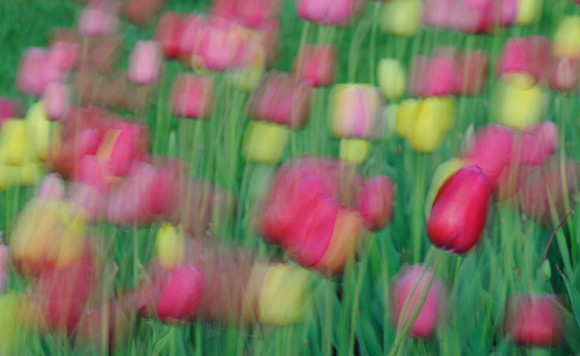
Blowing in the WindWindy conditions are not ideal for capturing close up photographs of flowers. In this case, the flowers were long-stemmed tulips and the wind was gusting at 35 mph! So, I decided that if I can't beat 'em, then join 'em! The use of a neutral density filter allowed me to select a 1/2 second exposure (f/14 at ISO 200). The subject of this photograph became the wind.
Where Did Everyone Go?One thing that many viewers point out about my pictures is that generally the photographs are free of pedestrians. It's true that I will go through great pains to photograph landscapes and architectural scenes that don't include people, particularly tourists, in the scene. This is usually quite a challenge, but I use some different techniques to try to accomplish this. I visited the Ava Maria Oratory in Florida on a Sunday afternoon. I was pleasantly surprised that there was so little auto and pedestrian traffic around the church. So, I simply waited until the scene was clear before pressing the shutter!
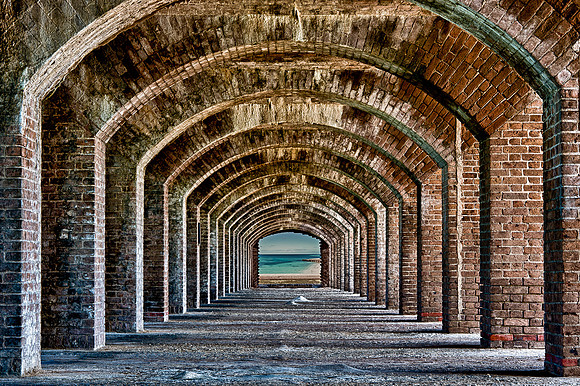
Sometimes, it isn't practical to wait until everyone leaves a scene before releasing the shutter. While visiting Fort Jefferson at the Dry Tortugas National Park off the coast of Florida, I wanted to capture a photograph of the repeating arches within the fort. However, two people continued to linger in the back of the scene. Later, I simply removed them by using the cloning tool within Photoshop. This is my most common method of dealing with stray pedestrians in a scene.
Action Shots at the ZooI visit the Brookfield Zoo quite often to practice my photography. While capturing photographs of the animals, I've noticed that animals tend to repeat behaviors in cycles. If a bear jumps into the water and swims from one end of the pool to the other, the chances are very high that he will do it again in the next ten or fifteen minutes. The following image required good timing as the claws only appeared above the water for a couple of seconds and the subject was tightly framed with a 500mm lens. The key to getting this picture was knowing in advance what the bear was going to do. He lifted his claws in the same manner during three previous passes through the water. So, I pre-focused on that area and waited for the repeat behavior to happen.
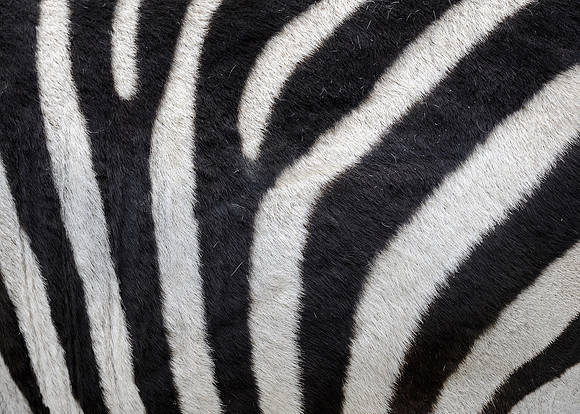
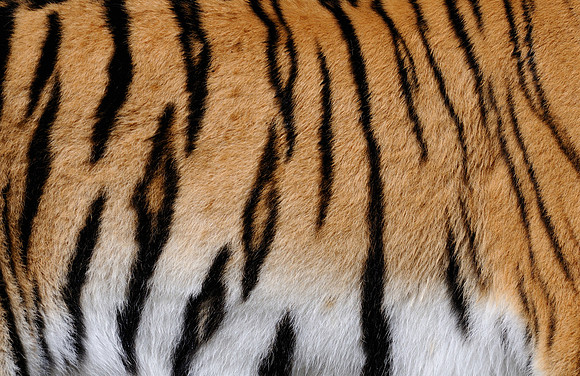
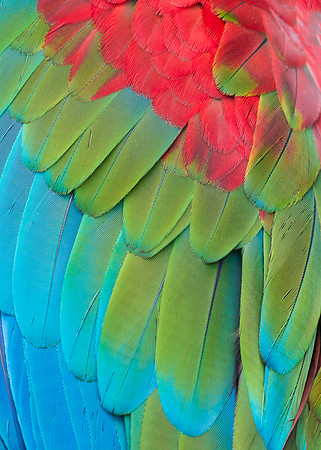
Animal PatternsOne way to create more interesting images of animals is to get really close--so close that the subject becomes the pattern:
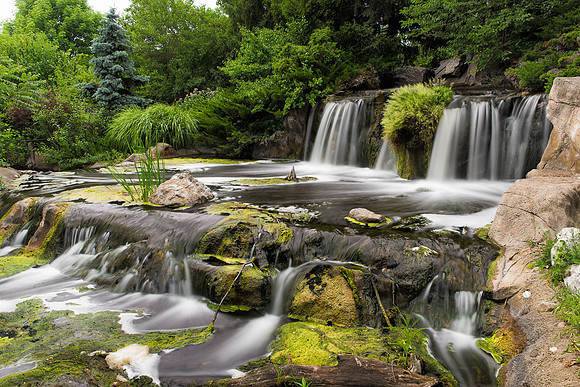
Letting the Water FlowWhen taking photographs of waterfalls, I generally like to use long exposures. Longer exposures provide time for the water to flow enough to introduce some blur. The amount of blur will directly correspond to the length of the exposure. Some blur helps make the water appear softer and smoother. The amount of blur is a matter of personal preference. And, the appropriate shutter speed will depend upon the focal length of the lens and how fast the water is moving. Things are so much easier with digital cameras as it is now just a matter of experimenting with a variety of shutter speeds and reviewing the images on the camera's LCD panel to determine which effects are preferable. One challenge is achieving long enough shutter speeds. Sometimes, there is simply too much light to allow for shutter speeds of several seconds--even with the ISO set to the base level and with the narrowest of f/stops. The use of a neutral density and/or polarizing filter will reduce the amount of light entering the lens. Of course, it also helps to shoot waterfalls on a cloudy day as there is less light to begin with. For this image, I used a Singh Ray Vari ND filter. The Vari ND allows the photographer to dial in the strength of the ND filter. To achieve a shutter speed of 8 seconds, I dialed the ND filter to near its maximum power (using about 7 stops of effect). I also went with a narrow aperture of f/13 and the base ISO of 100 for the Nikon D800. This image of a man-made waterfall was captured at Lake Katherine in the Chicago suburb of Palos Heights:
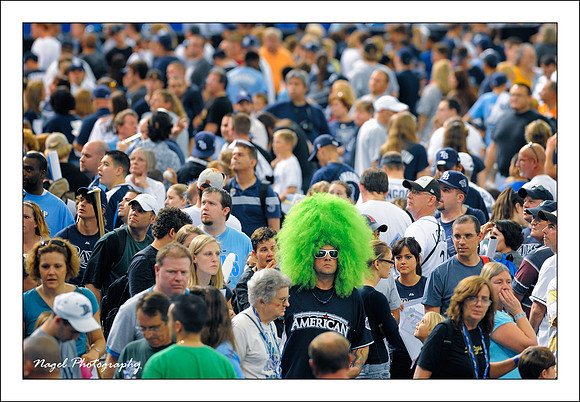
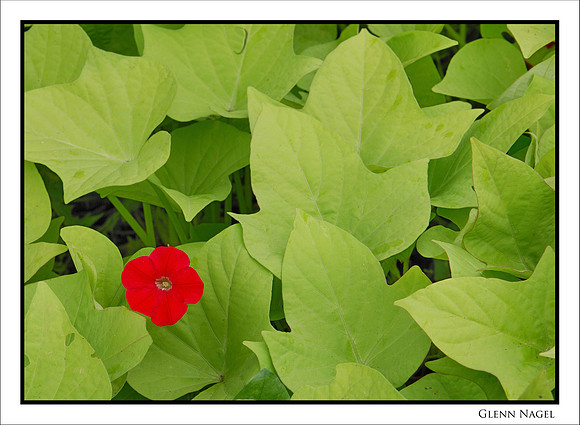
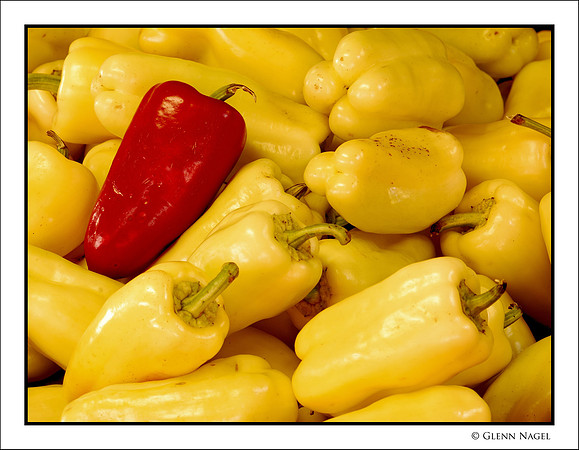
One in Every CrowdOne of my favorite composition techniques is to include one element in the frame that simply doesn't appear to belong: Such as the one fan with the big green hair in a crowd of Rays' fans at Tropicana Field...
Using Long ExposuresOne of the things that I enjoy about photography is how it enables me to see things in new ways. Using long exposures presents the world in a way that we don't ordinarily experience. For this image of a pianist practicing at the Smith Memorial Music Building on the campus of the University of Illinois in Urbana-Champaign, I selected a 1.3 second exposure. This long exposure combined with the musician's movements blurred the pianist in the frame. Since the camera was secured on a tripod, everything else in the frame remained sharp. I think that the selective blurring makes this photograph more interesting and more dynamic. It's a technique that I plan to utilize more in my photography moving forward.
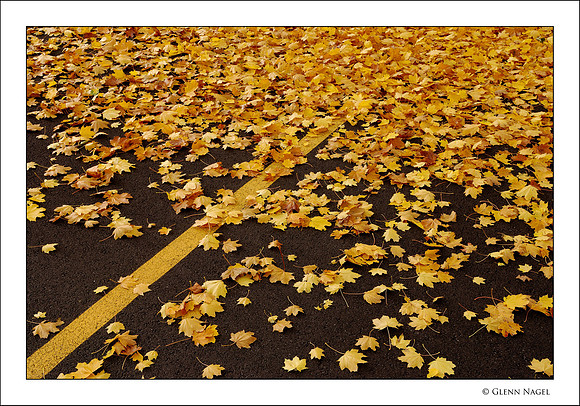
Look Down!Many times, I will look up and down in search of interesting subjects for a photograph. Sometimes, the most interesting subjects are right next to my feet! While visiting Traverse City, Michigan, I drove to the Old Mission Lighthouse on a cold and rainy morning. When I arrived at the lighthouse, I was disappointed to see that the structure was under construction. Before getting back in the car, I noticed these leaves on the pavement:
During one of my visits to the Brookfield Zoo, I captured very few images that were worth keeping. Then, I noticed these autumn leaves on the blacktop next to my car as I was getting ready to leave. The thing that attracted me to this scene was how the color of the parking lot stripe precisely matched the color of the leaves!
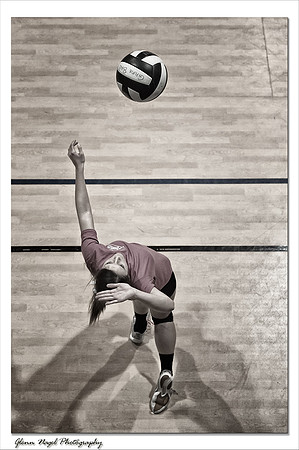
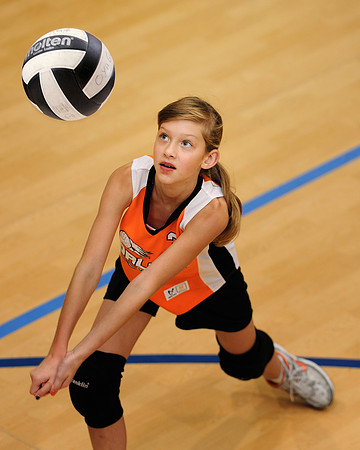
This technique also provided an interesting perspective for volleyball! I captured this image of a volleyball serve from the track that circles the gym from above.
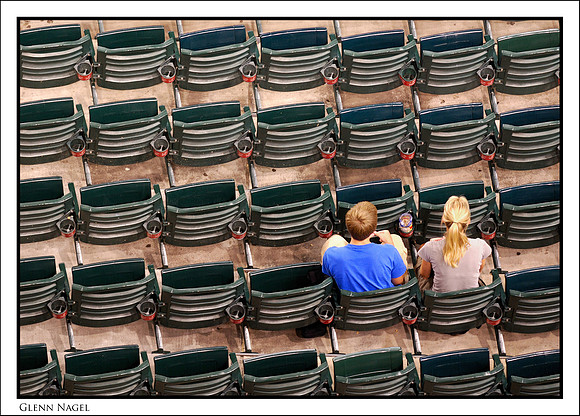
I used the same technique to capture a different perspective of two fans before a game at Chase Field in Phoenix.
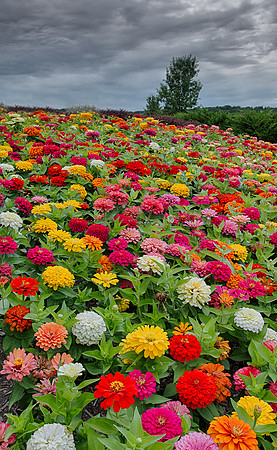
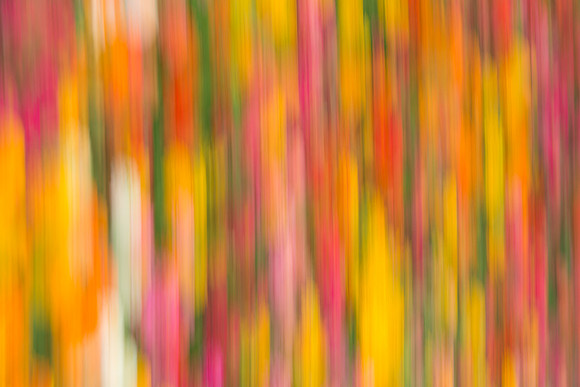
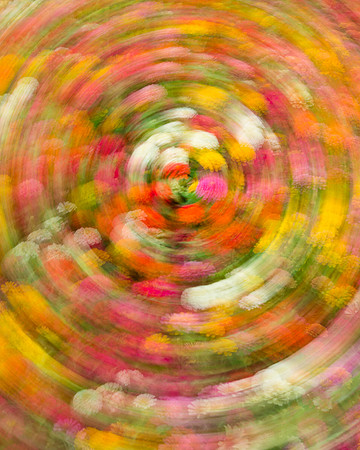
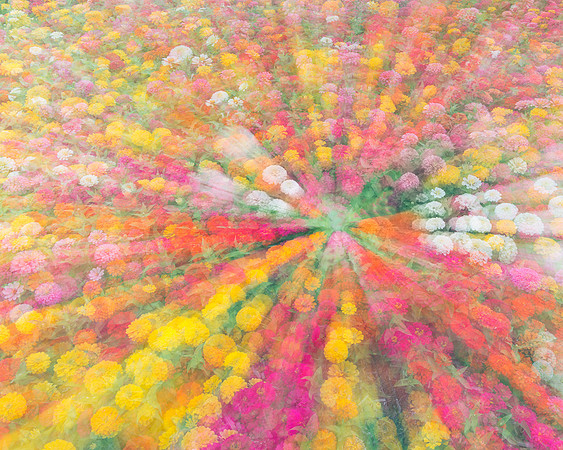
Variety of Abstract TechniquesEarlier this week, I captured some photos of this bed of flowers (zennias). This image consisted of five exposures blended together using Nik's HDR Efex Pro 2 to create a high dynamic range (HDR) photograph. HDR Efex Pro 2 was just released yesterday!
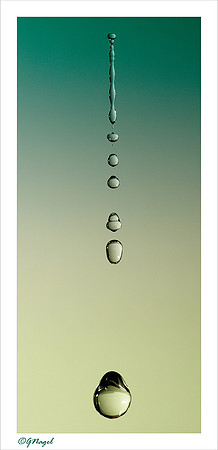
Freezing Action with StrobeIt doesn't always take a fast shutter speed to freeze a moving subject. When a flash unit is the primary light source, one can rely on the short burst of light from the strobe to freeze action. For the following photograph, I manually set the exposure on the camera (1/200th, f/18, ISO 200) to ensure that the ambient light in the room would not contribute to the overall exposure. Without flash, this image would be severely underexposed. Then, I introduced a flash unit (Nikon SB-800) and manually set the power of the flash to provide the desired exposure. Since the flash duration is so short (probably about 1/10,000th of a second at a low power setting), the moving subject gets stopped in its tracks!
|