|
I'll be posting some random thoughts here about my photography: my travel plans, technical information behind some images, stories about how certain pictures were captured, etc. The timing of the postings will also be random as my priority is capturing new images rather than writing about existing ones. I hope you will feel free to comment on any of my postings and I appreciate you taking time to read my entries.

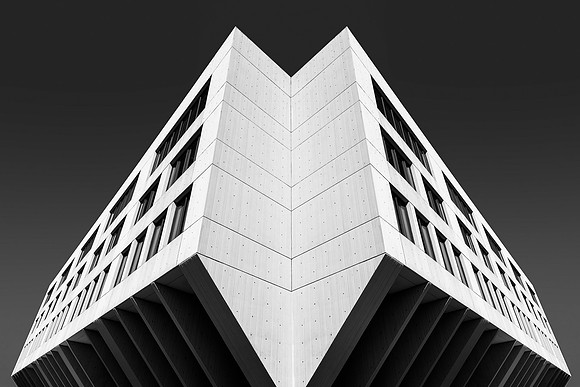
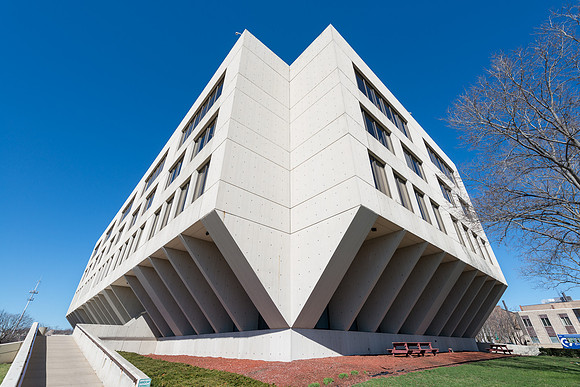
Symmetry (and the Mirror Trick)While visiting downtown Joliet last week, I spent much of my time capturing pictures of the Will County Courthouse. During past visits, I never thought to take photos of the building. From the street, the front entrance isn't all that appealing. There are several distracting elements in front of the building and it's almost always backlit during this time of the year. This time, I happened to walk to the back of the building. From the back, the scene is simplified. From there, it's all about the geometry. I ended up taking several different pictures--all from the same vantage point and with the same lens. Here's one of the images from the session. I liked the nearly perfect symmetry:
Click here to view a blog entry that I posted a while back about how to use the Mirror Trick. Not only did the Mirror Trick clean up the frame, but it helped make the picture perfectly symmetrical! Finally, I thought the conversion to black and white simplified the image even further. Hopefully, all that's left are the lines, the geometry and the symmetrical shape (now highlighted in white) that I wished to feature. Editors ChoiceDreamstime, a photo stock agency with over 250,000 contributing photographers, selected one of my submissions for its Editors Choice:
The cloudy sky is what made the shot for me. The smoke was pouring out of the stacks at a high rate. The cloudy sky in the background gave the appearance that the smoke was filling the sky. Of course, I visited this location to photograph the amazing slot canyons. But, sometimes it pays to look around--photographs can appear where they are least expected!
Visitors From Around the WorldAt last count, visitors from 157 countries have viewed photos on this website! Following is a list of those countries in order of the number of visitors:
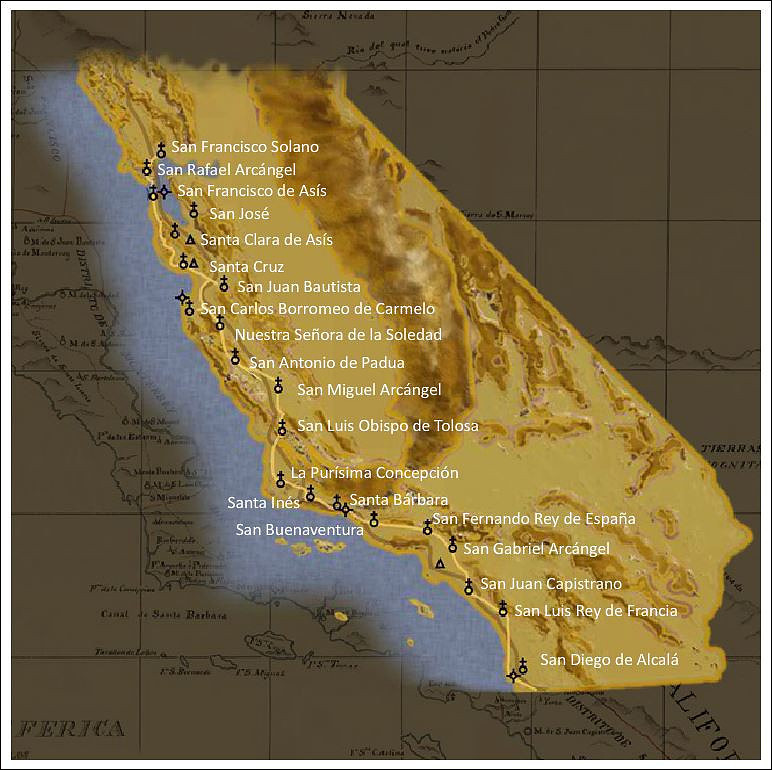
Thanks to one and all! Missions of California Trip ItineraryFor my next photography road trip, I plan to visit the 21 Missions of California. Of course, I've included many other sites along the way. This trip will cover approximately 6,000 miles and will take the better part of a month to complete. In addition to the missions, I'll visit several amazing landscape locations (Mono Lake, Lake Tahoe, Joshua Tree, California coastline), a ghost town, three Presidential Libraries and numerous architectural locations in cities such as Las Vegas, Los Angeles and San Diego. I also hope to have the opportunity to visit family along the way. Here's my preliminary itinerary:
My Next Photography ProjectFor my next photography project, I will be visiting the 21 Missions of California:
My plan is to visit each of the 21 Missions of California during the summer of 2016. In addition to the missions, there are several other interesting locations included on my itinerary:
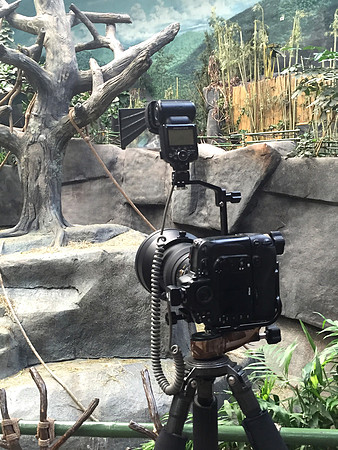
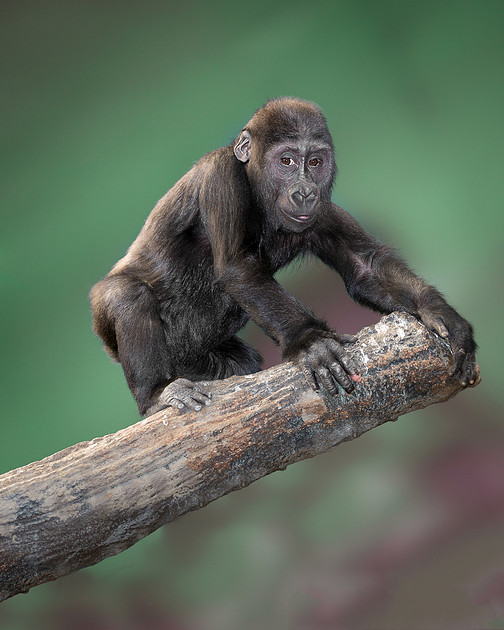
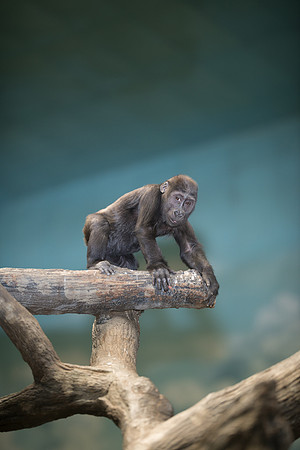
This is a trip packed with photo opportunities as well as opportunities to visit family along the way. I'm dedicating nearly a month to complete it--including the drive from Chicago and back. Soon, I'll be sharing a more specific itinerary as part of this blog. From Capture to DisplayDuring my last visit to the Brookfield Zoo, an infant gorilla was quite active in the Tropic World exhibit. I captured some images with my Nikon D800 and 200 f2 lens. I also used a Nikon SB-900 with a Better Beamer to introduce some fill lighting on my subject:
Here's the out of camera picture:
Within Photoshop...
In Lightroom:
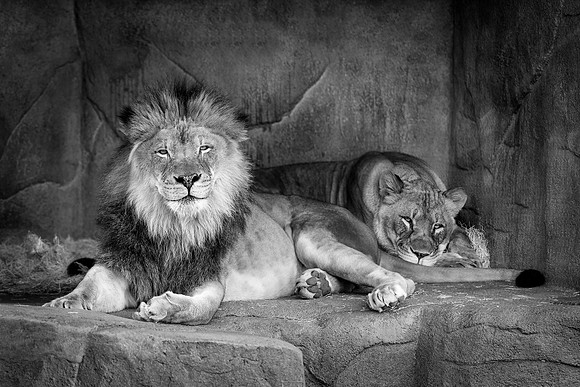
So, how much time did all this take? From beginning to end (from import to export) took me about ten minutes. I liked the capture enough that I thought it was worth the ten minute investment. Focus Stacking - Lions!Focus stacking is a technique that is sometimes used to extend the depth of field of focus within a frame. By combining multiple images captured at various focus distances, the final image will yield a far greater depth of field than is possible with just one exposure. A common application of this technique is macro photography. I decided to use this technique on a much smaller scale (i.e., just two images) to extend my depth of field of focus while taking a picture of two lions at the Brookfield Zoo. For this image of the lions, I used my Nikon D800 with the 300 2.8 lens. The lions were positioned back into a relatively dark enclosure of the exhibit which required a longer exposure. At an ISO setting of 400 and an aperture of f/3.5, my shutter speed was just 1/160th. I can get sharp images at 1/160th with the 300mm lens since it is mounted to a tripod. After taking a shot, I checked the image on my camera's LCD and noticed that the lion was in focus--but the lioness wasn't in focus. At f/3.5 I didn't have enough depth of field to get both lions in focus. I considered using a narrower aperture such as f/11 to extend the depth of field, but that adjustment would take away approximately 4 stops of light. To offset the loss of the 4 stops, I would have to increase my ISO from 400 to 6400 (resulting in a significant loss of image quality) or slow my shutter speed to 1/10th of a second--or go with some combination of the slower shutter speed and higher ISO. Rather than make those sacrifices, I used a modified focus stacking technique. I locked the camera down on the drop and captured one exposure with the lion in focus. I then captured a second frame with the lioness in focus. While processing the images, I used the lasso tool to make a loose selection of the head of the lioness from that second frame where the lioness was in sharp focus. I moved that selection onto the first frame (where the lion was in focus). I positioned the in-focus lioness head over the out of focus lioness head in a separate layer. I then applied a white mask to the lioness layer and used a black brush to remove some of the areas around the edge so that only the head of the lioness was replaced with the sharper version. Using this quick and easy approach, I was able to render both lions in focus without having to make destructive in-camera adjustments to my ISO or shutter speed selections.
The technique of blending more than one image with various focus points is a powerful tool. I've also used it in the past for architecture and landscape images. But, this was my first time using it with lions!
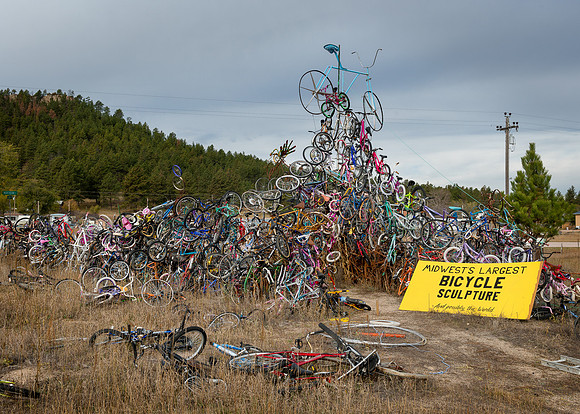
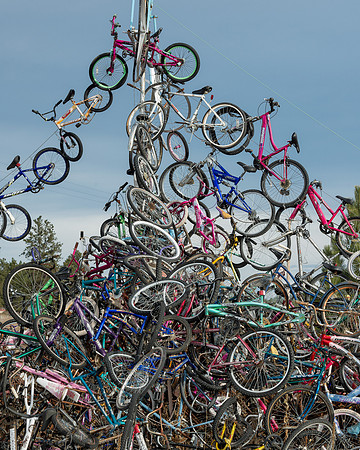
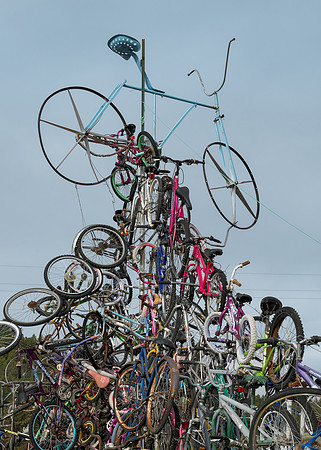
Midwest's Largest Bicycle SculptureOne of the advantage of a road trip is seeing unusual and unexpected "attractions" along the road. While driving from Custer to Deadwood during my road trip through South Dakota, I noticed a large pile of bikes to the left of the road in the small town of Pringle, South Dakota. I was in no hurry, so I pulled over to take a closer look. There was a sign in front of what looked like a pile of junk that read: "Midwest's Largest Bicycle Sculpture...And Possibly the World" My guess is that this claim is probably true. It's the first bicycle sculpture that I've ever come across. I started taking pictures of the sculpture and ended up staying for quite a while. I switched back and forth between a wide angle and telephoto lens in hope of capturing a variety of images. The light was constantly changing. Most of the time the lighting was very dull. At times I was shooting in a light rain. Some light broke through the clouds every so often.
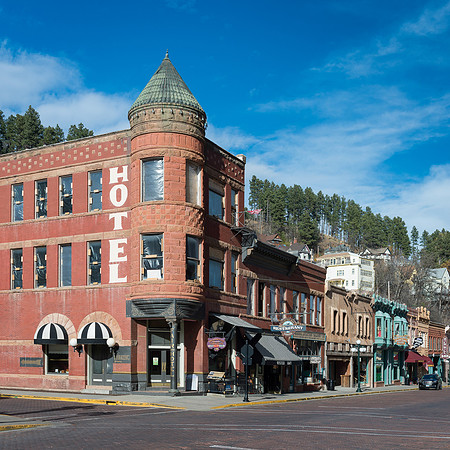
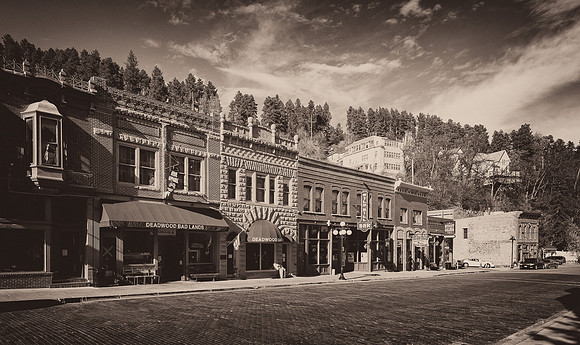
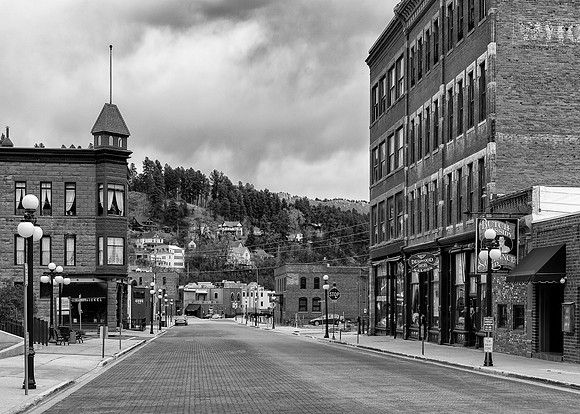
Streets of DeadwoodI spent a night in Deadwood as part of my recent road trip through South Dakota. It's been a long time (July, 1993) since I visited Deadwood prior to this trip. Back then, I visited during the prime tourism season--July. The streets were crowded with cars and pedestrians. Capturing photographs of Deadwood's historic district was nearly impossible. This time, I visited in November. Upon entering the city, it was obvious that crowds would not be a problem. The hotel where I stayed, the Hampton Inn, lowered its rate from $175 in October to $39 a night during my stay in early November! After checking into the hotel, I walked down Main Street in the late afternoon light. For the most part, the street was clear of parked and moving cars. There were only a few pedestrians on the sidewalks. It was a perfect opportunity to capture pictures of the historic architecture without a lot of distractions in the frame.
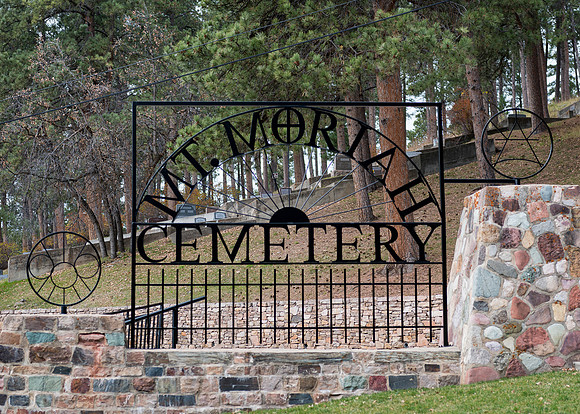
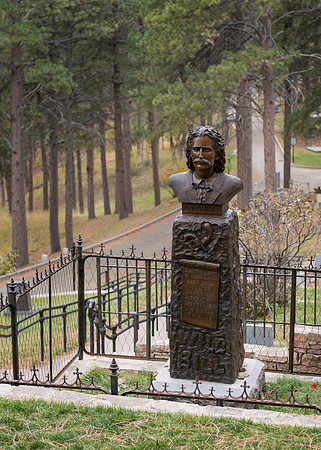
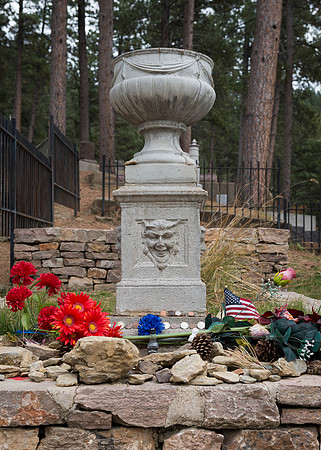
When I arrived at the cemetery, the admission booth was closed and my car was the only one in the parking lot. Walking through this quiet old cemetery by myself on a crisp November evening while searching for the historic burial sites made this a more memorable experience than if I had been there with a large crowd of tourists. I captured a few images at the cemetery:
New Hampshire's Representatives HallAfter completing my road trip through the states of the Northeast, I have now visited all 48 state capitols in the continental United States. Concord was one of the last capital cities that I visited. After New Hampshire, only Maine and Vermont followed. The size of the state's House of Representatives surprised me. There are 400 house representatives in this relatively small state. The population of New Hampshire is just over 1.3 million. So, each legislator represents just 3,300 residents. This makes New Hampshire the most represented state in the country--and possibly the world. As a perspective, each legislator in California represents 465,000 residents.
It was somewhat uncomfortable shooting this interior on a hot summer afternoon as the chamber does not have air conditioning! The staff at the New Hampshire State House treated me well. When I first came across this chamber, I saw signs outside indicating that visitors are not permitted to step inside the room. The chamber was also dark--except for the harsh sunlight streaming through the windows. After I explained that I had just three state capitols left on my list to photograph, I was allowed to enter Representatives Hall. The employee was unable to turn the lights on, however, as the switches were inside of a locked box. So, he called maintenance and someone came by to adjust the lighting to my preference. They also lowered the blinds for all of the windows to reduce the dynamic range of exposure within the room. I wish all of the state capitols were so accommodating!
|